


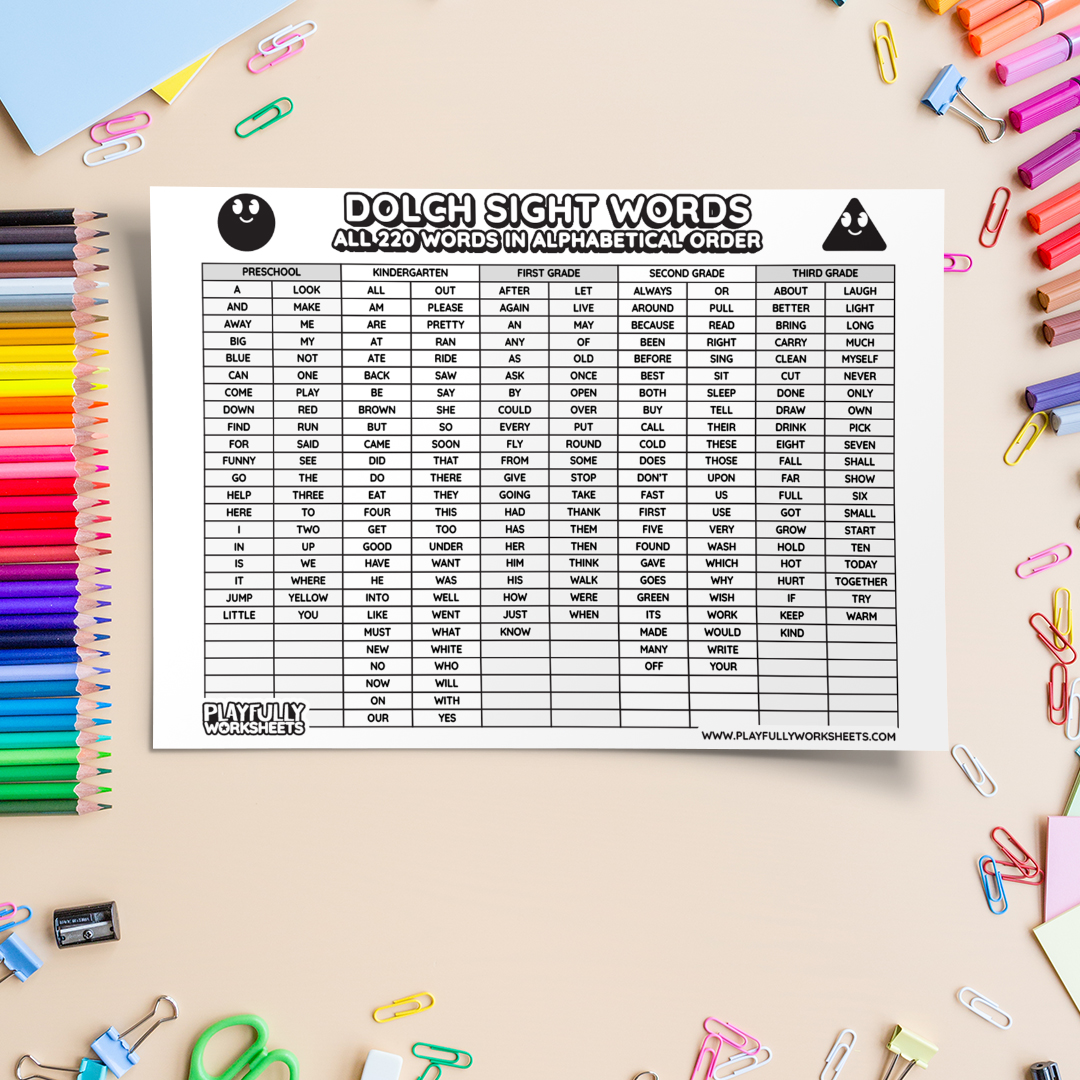
Sight words are those high-frequency words children must recognize instantly when learning to read. Unlike phonetic words that can be sounded out, sight words often don’t follow regular spelling or pronunciation rules. Because of that, young readers need to remember them visually and automatically, almost like recognizing a familiar face. Words like the, said, was, and you are perfect examples—they appear everywhere, but they don’t follow the typical phonics patterns children learn in early childhood education.
As children progress through preschool, kindergarten, and early elementary school education, sight words become essential stepping stones. They allow kids to read simple sentences without constantly stopping to decode every word. In special education and regular classrooms alike, teachers often emphasize sight word recognition early because it supports confidence, accuracy, and fluency. That’s why sight word practice appears in so many super teacher worksheets, kindergarten worksheets, and other free kindergarten worksheets across many learning platforms.
Why Sight Words Matter in Early Reading
Sight words matter because they remove friction during the early reading process. When a child can instantly recognize the most common words in a sentence, reading becomes smoother and more enjoyable. Instead of getting stuck or frustrated, young readers begin to feel capable and proud of their progress. This early confidence is incredibly important, especially in kindergarten activity sheets or kg activity sheets where children are just beginning to explore printed text on their own.
Furthermore, sight words form the backbone of fluent reading. Since they appear so frequently, mastering them frees up mental energy for decoding more complex words. As a result, children can focus on comprehension, storytelling, and the enjoyment of reading—rather than sounding out the same tricky words over and over again. This shift toward fluency is a major milestone in early childhood education and significantly impacts long-term literacy success.
The Science Behind Sight Word Recognition
Even though sight words feel like simple memorization, there’s fascinating science behind how children learn to recognize them. The brain uses a process called orthographic mapping, which connects how a word looks, sounds, and means something. Over time, this process builds a “mental library” that stores words for instant recognition. This means children aren’t just memorizing shapes; they are creating meaningful pathways that help them read faster and more confidently.
In addition, research shows that some words must be memorized holistically because phonics alone isn’t enough. Words like one, does, or two don’t match their spelling patterns, so they require a different learning approach. As children continue practicing sight words through reading experiences, conversations, and quick visual games, their orthographic mapping becomes stronger—making reading feel more natural and intuitive.
How Many Sight Words Should Kids Know at Each Grade Level?
While every child develops at their own pace, there are general expectations that can help parents understand the process. In preschool, children usually begin with a handful of simple words like I, a, the, or and. These words appear often in early books and are easy to recognize in everyday environments. At this stage, the goal is exposure rather than mastery.
By kindergarten, students typically work through larger kindergarten sight word lists, such as Dolch sight words or Fry lists. Many children learn between 30–60 sight words during this grade as they build strong school education foundations. Once they reach first grade, the list expands even more. First grade sight words often include more challenging vocabulary, and children may learn up to 100 sight words as they build fluency. By second grade, students continue strengthening their reading skills with increasingly difficult sight word lists that prepare them for chapter books and higher-level comprehension.
Common Challenges Children Face With Sight Words
It’s completely normal for children to struggle with sight words at first. Many sight words look visually similar—like the, they, them—which can confuse young readers. Since these words can’t always be sounded out, kids might guess based on the first letter or shape instead of recognizing the entire word. This leads to errors that parents and teachers see commonly during reading practice.
Another challenge is forgetting previously learned words. Because sight words rely heavily on exposure and repetition, long gaps between practice sessions can cause children to lose familiarity. Additionally, some kids try to memorize words mechanically without truly understanding them in context, which makes it difficult to transfer recognition to real reading situations. The good news is that with consistent reinforcement and gentle reminders, children eventually build the automaticity needed for smooth reading.
Strategies That Actually Work for Teaching Sight Words
One of the most effective ways to help children learn sight words is through active, meaningful repetition. Instead of simply memorizing flashcards, kids learn best when they engage with sight words in short, playful, and purposeful activities. This can include reading mini-books, noticing sight words in everyday print, or using multisensory techniques like tracing words in sand or forming them with playdough. These multisensory strategies are especially helpful in special education settings, where additional support can make a big difference.
Another helpful approach is quick recognition games. Fast, one-minute challenges—like spotting sight words around the classroom or pointing them out in picture books—help reinforce automatic recognition. These strategies give children the practice they need without feeling repetitive or overwhelming. Over time, the combination of meaningful exposure and playful learning strengthens their sight word foundation and builds confidence.
Connecting Sight Words to Real-Life Reading Experiences
Sight words aren’t meant to live only on worksheets or flashcards. In fact, the best learning happens when children see these words in the real world. While reading storybooks, parents can pause and point out familiar sight words, helping kids make connections between their practice and meaningful text. This approach also helps them understand how these words carry meaning in sentences rather than existing as isolated symbols.
Beyond storybooks, everyday environments offer plenty of opportunities to reinforce sight words. Street signs, menus, cereal boxes, and even grocery labels often contain common sight words. Encouraging kids to notice these words in the world around them turns daily routines into rich reading experiences. This simple shift helps transform the world into an ongoing classroom and allows children to practice literacy naturally and joyfully.
How Sight Words Support Other Reading Skills
Even though sight words stand apart from phonics, they support phonics learning in powerful ways. As children begin to master CVC words, CVCe words, and early grammar structures, sight words provide the framework needed to read complete sentences. They act like little “glue words,” holding sentences together while children decode the phonetic parts. This balance helps young readers develop smoother, more rhythmic reading patterns.
Additionally, knowing sight words reduces cognitive load. When children don’t have to decode every single word, they can concentrate on blending sounds, understanding meaning, and reading with expression. This improves comprehension and fluency simultaneously. Over time, the combination of sight word mastery and phonics skills leads children toward becoming confident, capable readers.
If you’re ready to support your child or students even more, download our free sight word practice worksheets at Playfully Worksheets. These simple tools offer engaging practice that reinforces everything they’re learning while helping build a strong foundation for lifelong reading success.
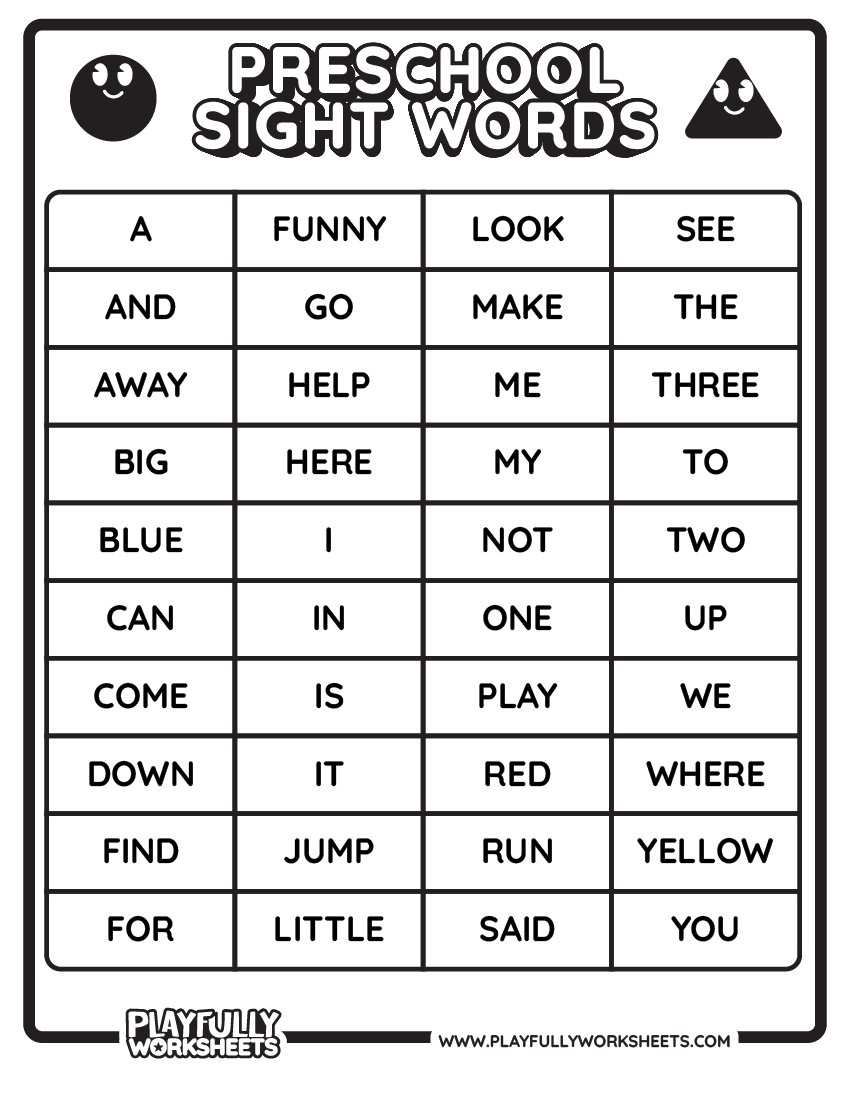
Preschool Sight Words
Unleash your creativity with our magical Dot-a-Dot! Each colored dot is one step closer to mastering the letter A and creating a unique masterpiece.
a, and, away, big, blue, can, come, down, find, for, funny, go, help, here, I, in, is, it, jump, little, look, make, me, my, not, one, play, red, run, said, see, the, three, to, two, up, we, where, yellow, you.
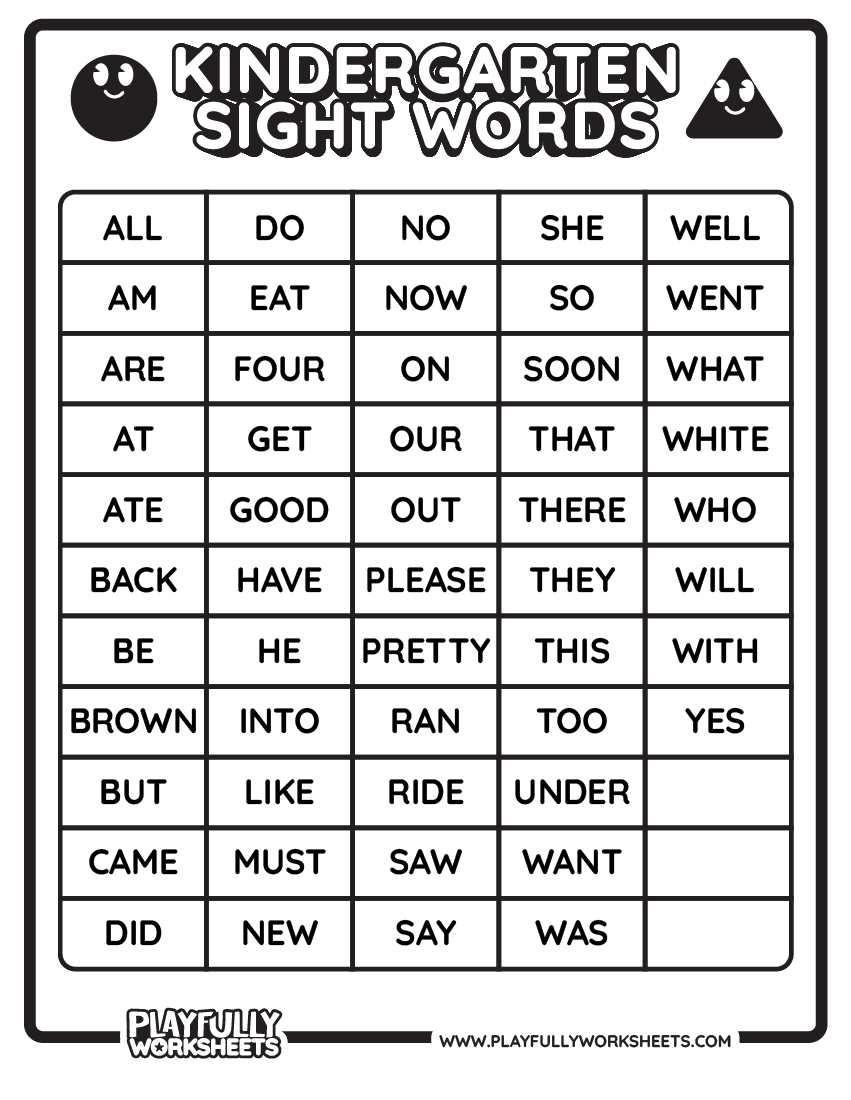
Kindergarten Sight Words
Unleash your creativity with our magical Dot-a-Dot! Each colored dot is one step closer to mastering the letter A and creating a unique masterpiece.
all, am, are, at, ate, be, black, brown, but, came, did, do, eat, four, get, good, have, he, into, like, must, new, no, now, on, our, out, please, pretty, ran, ride, saw, say, she, so, soon, that, there, they, this, too, under, want, was, well, went, what, white, who, will, with, yes
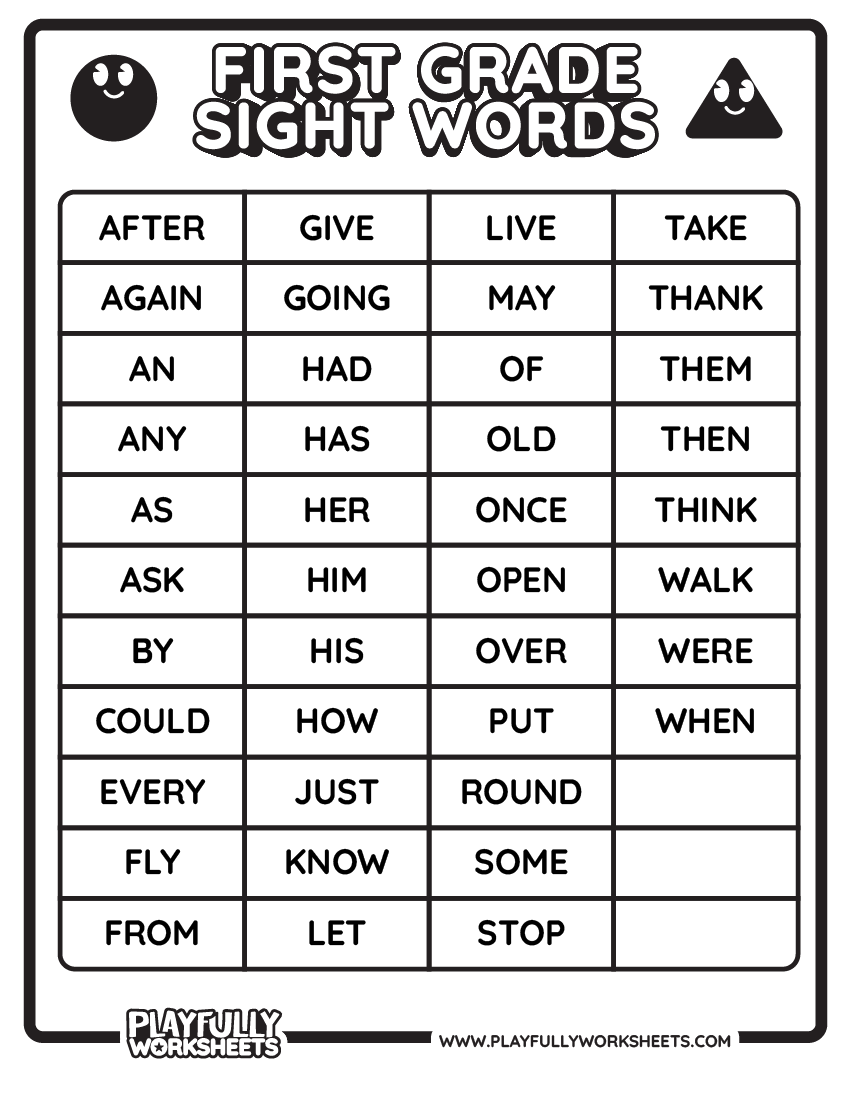
First Grade Sight Words
Unleash your creativity with our magical Dot-a-Dot! Each colored dot is one step closer to mastering the letter A and creating a unique masterpiece.
after, again, an, any, as, ask, by, could, every, fly, from, give, going, had, has, her, him, his, how, just, know, let, live, may, of, old, once, open, over, put, round, some, stop, take, thank, them, then, think, walk, were, when
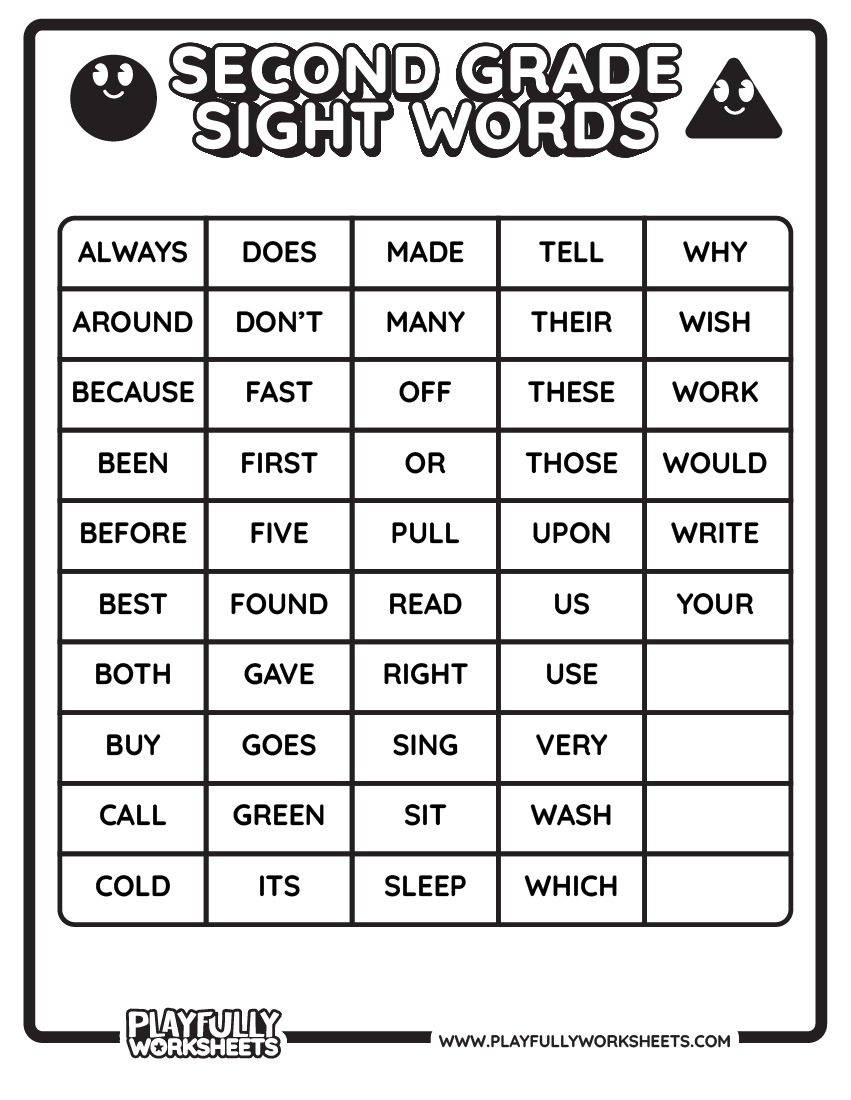
Second Grade Sight Words
Unleash your creativity with our magical Dot-a-Dot! Each colored dot is one step closer to mastering the letter A and creating a unique masterpiece.
always, around, because, been, before, best, both, buy, call, cold, does, don’t, fast, first, five, found, gave, goes, green, its, made, many, off, or, pull, read, right, sing, sit, sleep, tell, their, these, those, upon, us, use, very, wash, which, why, wish, work, would, write, your
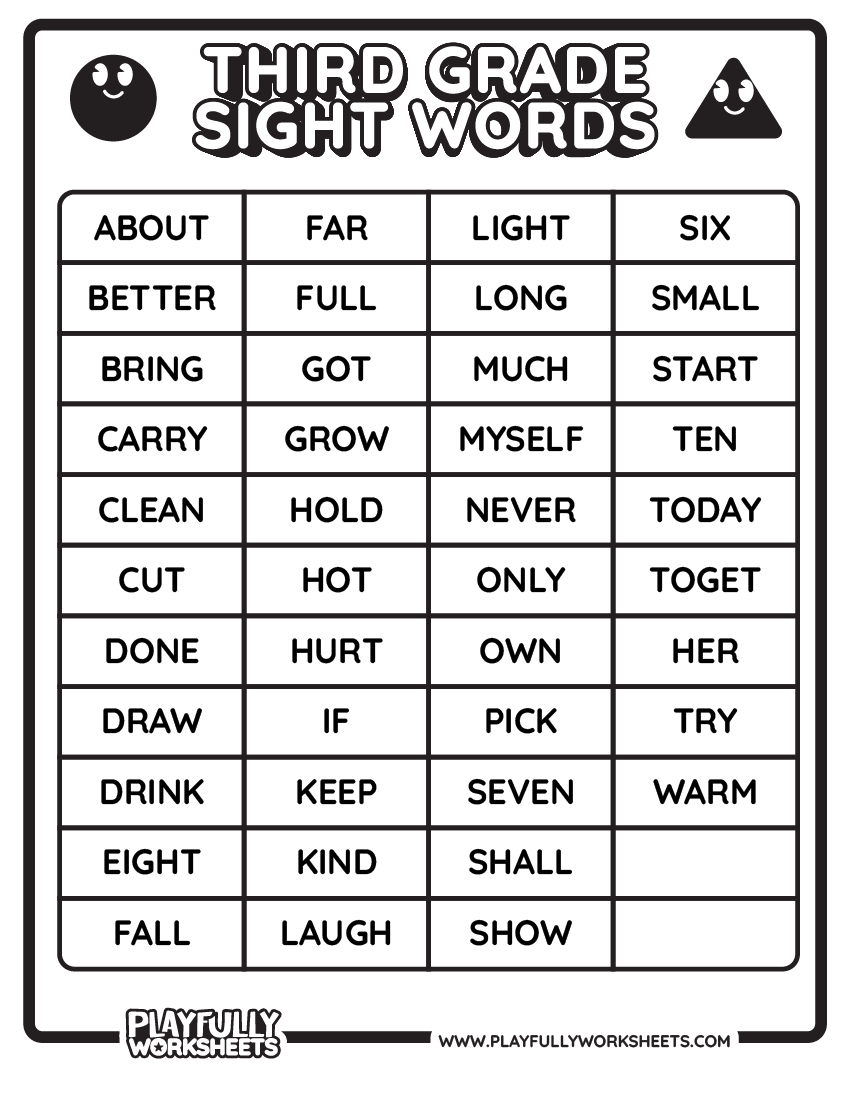
Third Grade Sight Words
Unleash your creativity with our magical Dot-a-Dot! Each colored dot is one step closer to mastering the letter A and creating a unique masterpiece.
about, better, bring, carry, clean, cut, done, draw, drink, eight, fall, far, full, got, grow, hold, hot, hurt, if, keep, kind, laugh, light, long, much, myself, never, only, own, pick, seven, shall, show, six, small, start, ten, today, together, try, warm