


Learning to recognize and match colors is one of the first cognitive skills that children develop in preschool. Far more than a simple visual activity, matching colors encourages observation, comparison, and logical thinking — all while keeping learning fun and engaging. Through color matching, children strengthen their attention span, visual memory, and ability to recognize patterns, setting the foundation for future skills in reading, math, and science.
What Are Matching Colors Activities?
Matching colors means identifying two or more objects that share the same color. For example, pairing a red block with a red crayon or finding two blue circles that look alike. These activities may seem simple, but they play a powerful role in developing a child’s visual classification skills — the ability to group, organize, and make sense of visual information.
For parents and teachers, color matching represents an essential step in early cognitive development. It helps children pay close attention to detail, improving concentration and focus. As they look for similarities, their brains begin to form connections — recognizing that certain objects, even when different in shape or size, can share the same attribute: color.
This process strengthens pre-mathematical thinking, teaching children how to categorize, compare, and sort. These are the same cognitive skills they will later apply to count, identify shapes, and understand quantities.
How to Introduce the Concept of Matching Colors
Start with real-life objects before moving to printed worksheets. For instance, use toys, building blocks, or items from the classroom or home. Hold up an object and say:
“This is red. Can you find another red?”
This approach encourages active observation and participation, transforming the task into a playful discovery. Once children are comfortable with tangible materials, you can transition to color matching worksheets, where they draw lines, circle matches, or color pairs.
This progression — from concrete to abstract — aligns perfectly with how preschoolers learn best. By connecting visual recognition to real-world examples, children not only identify colors but also learn to classify and reason through similarities and differences.
Developing Logical Thinking Through Color Matching
When children compare and pair colors, they’re doing more than practicing vocabulary — they’re engaging in early logical reasoning. They learn to analyze visual input, identify attributes, and make decisions based on observation.
For example, when a child looks at several items and selects two blues, they are demonstrating attention to detail, memory recall, and the ability to compare and contrast. These same skills will later support reading comprehension and mathematical problem-solving.
Furthermore, color matching helps develop pattern recognition, a core component of critical thinking. By noticing how certain colors repeat or differ, children begin to form early hypotheses: “These two are the same!” or “This one doesn’t match.” Encouraging them to verbalize these thoughts (“Yes! These are both blue!”) strengthens both their reasoning and language skills.
Tips for Parents and Teachers
To make the most of matching colors activities, start small. Introduce only two or three colors at first, such as red, yellow, and blue. Too many choices can be overwhelming for young learners.
Use hands-on materials like buttons, pom-poms, or colored cards before moving to paper-based tasks. This tactile exploration helps children connect sensory experience with cognitive learning. Encourage them to talk through the process — saying the color names aloud reinforces language acquisition and memory retention.
Another important aspect is positive reinforcement. Celebrate their progress with enthusiasm:
“You found two greens! Great job!”
This builds confidence and motivates them to keep exploring.
Finally, keep sessions short and dynamic. Preschoolers learn best in brief, focused activities that feel like play rather than formal lessons.
Color matching may seem like a simple preschool activity, but it’s truly a window into how children learn to see, think, and understand the world. Every time they compare shades and find a match, they’re practicing focus, reasoning, and creativity.
Through matching colors, children not only learn to recognize what’s alike — they learn how to observe, compare, and make connections. And that, in essence, is the heart of learning itself.
So next time your little one proudly says, “These are both yellow!”, remember that behind that moment of joy lies the foundation of future problem-solving, logical thinking, and lifelong curiosity.
Download your free Matching Colors Worksheets and help your preschoolers discover the power of observation and learning through play!
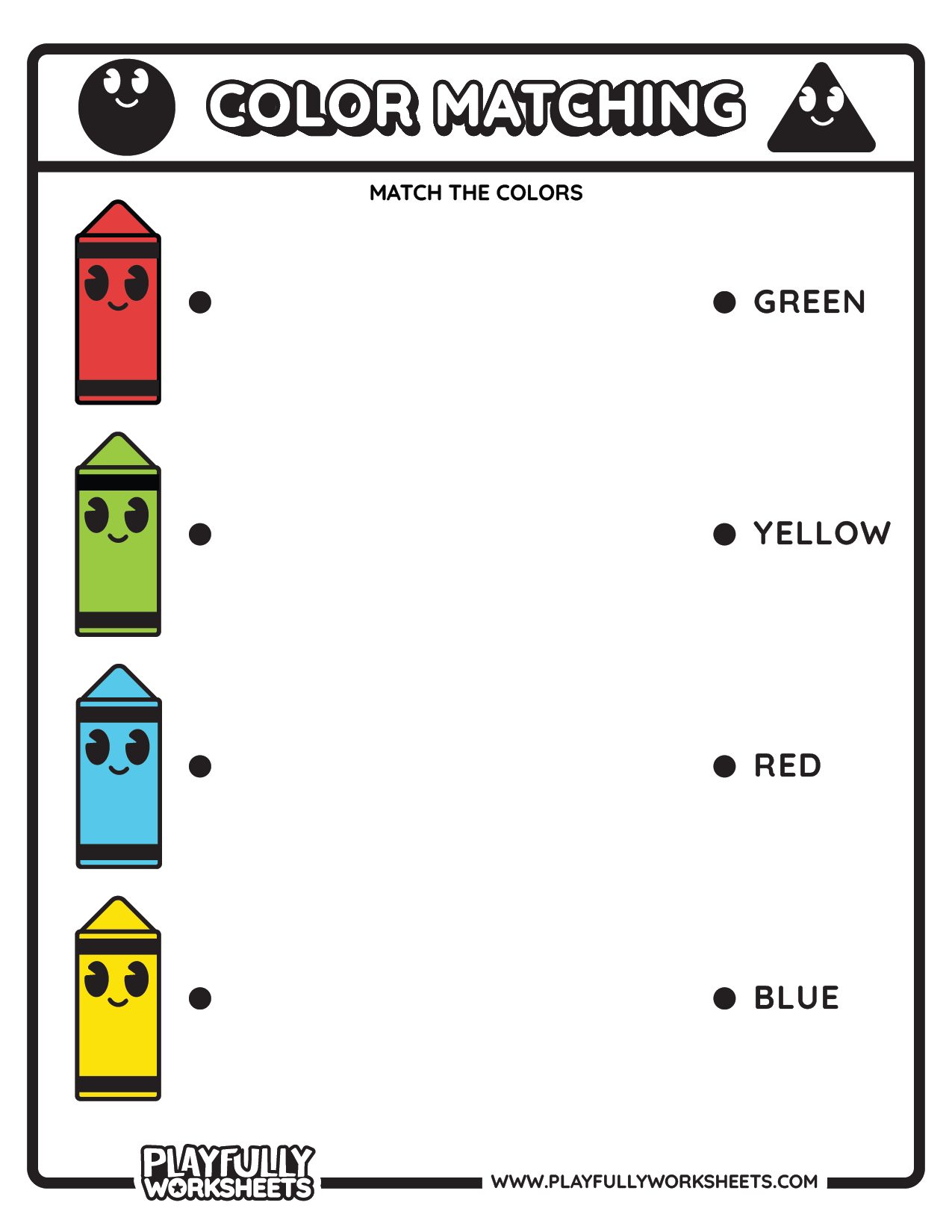
Matching Color with Text
A simple sheet with the letter A, also learn about uppercase and lowercase letters.
Option 2
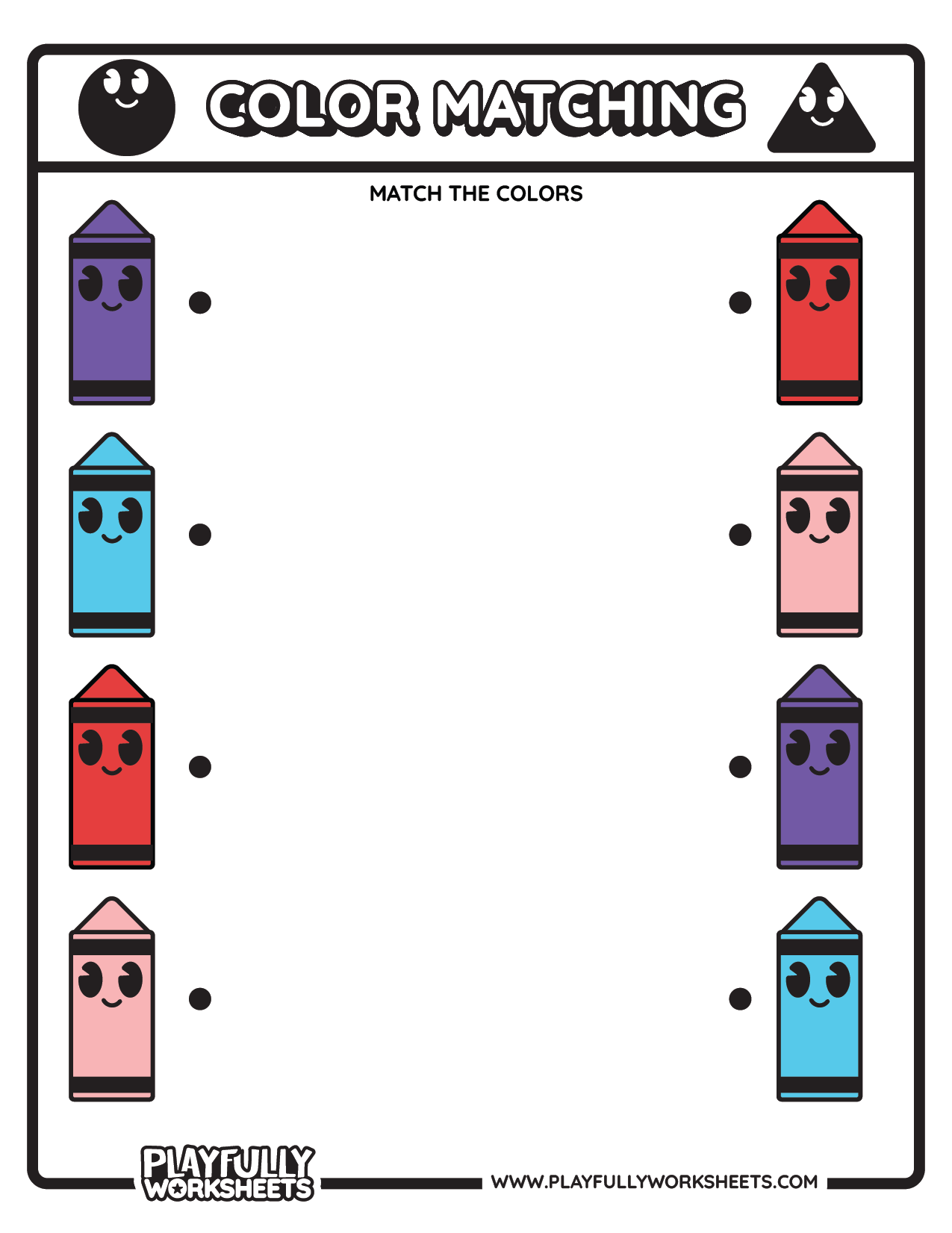
Matching Colors
Unleash your creativity with our magical Dot-a-Dot! Each colored dot is one step closer to mastering the letter A and creating a unique masterpiece.
Option 2
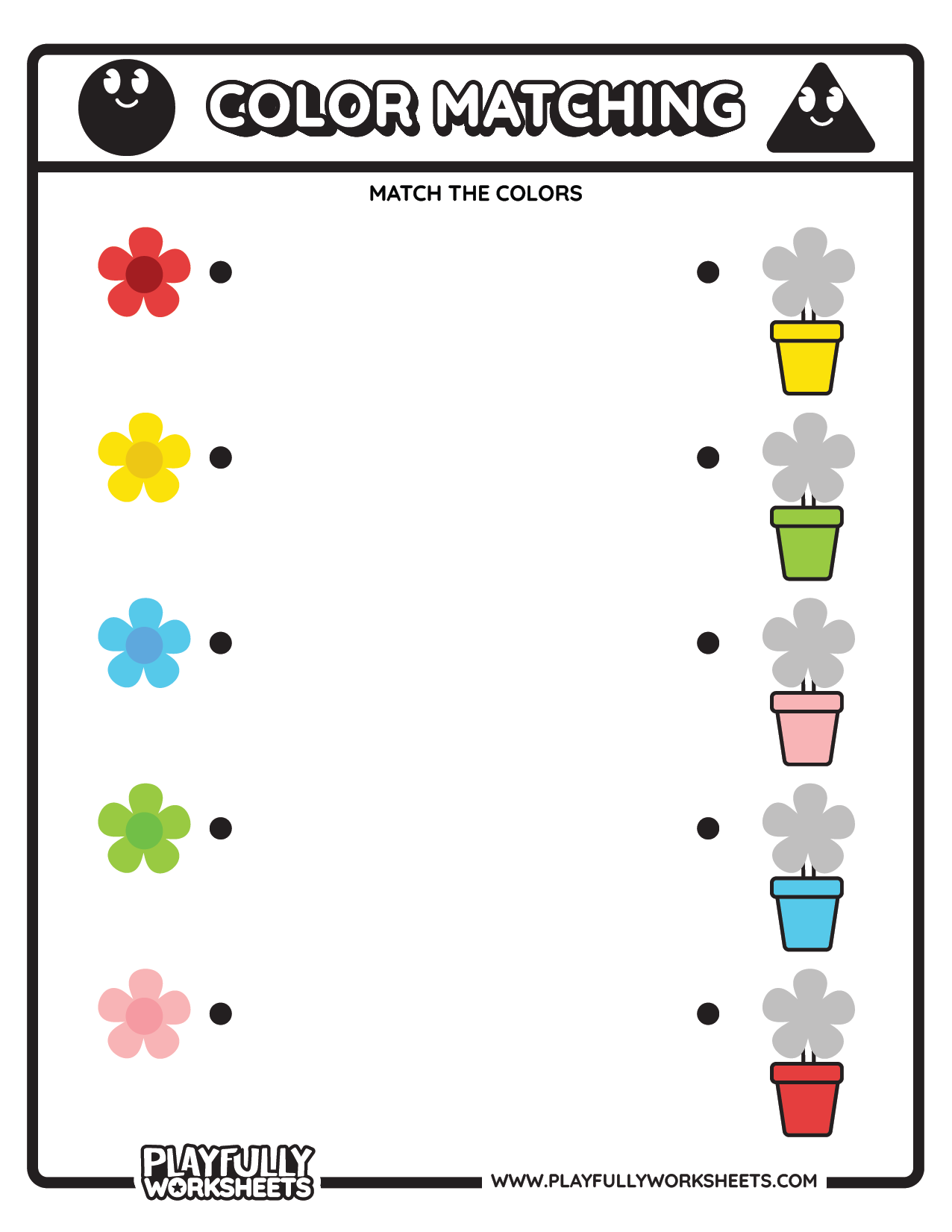
Matching Colors Flowers
Unleash your creativity with our magical Dot-a-Dot! Each colored dot is one step closer to mastering the letter A and creating a unique masterpiece.