
Learning colors is one of the most joyful and meaningful milestones in early childhood education. For young children, discovering colors is much more than recognizing pretty shades—it’s a way to understand and describe the world around them. Through Learn Colors activities, kids begin to identify, name, and understand colors while developing language, observation, and logical thinking skills.
Recognizing colors helps children communicate better, express emotions, and build vocabulary. When a child proudly says “the sky is blue” or “I like the red ball,” they are using color words to describe their experiences, connect with their surroundings, and express their personality.
Why Learning Colors Matters in Preschool
The ability to recognize and name colors is a key part of a child’s cognitive and visual development. As children learn colors, their brains begin organizing information more effectively, which helps them make sense of patterns, similarities, and differences in their environment. This skill supports problem-solving and categorization—two essential foundations for later learning in math and science.
From a language perspective, learning colors strengthens vocabulary and communication. Each new color word adds to a child’s descriptive language, allowing them to express what they see with more accuracy and creativity. Saying “a yellow flower” instead of just “a flower” shows how color learning helps children observe and describe details more clearly.
Color recognition also enhances memory and vocabulary. When children repeatedly hear and use color words, they begin to store them in long-term memory, making them easier to recall in daily life. Over time, colors become a natural part of their conversations and creative play.
Stages of Color Learning
Every child learns at their own pace, but there are general stages most children follow when learning colors. At first, toddlers may only notice bright contrasts—red, yellow, or blue. Gradually, they begin identifying and naming these colors correctly. Later, they can match and classify objects by color, and eventually, they learn about more complex shades like turquoise, silver, or lavender.
For preschoolers, the key is introducing colors slowly and intentionally. Teaching one color at a time helps avoid confusion and allows children to master recognition before moving on. Starting with the basic colors—red, yellow, blue, green, and orange—is ideal. Once children confidently identify these, secondary and mixed colors can be introduced naturally through play and exploration.
Strategies for Teaching Colors
When it comes to teaching colors, the best approach combines fun, repetition, and creativity. One effective method is the “Color of the Week” strategy. Dedicate an entire week to exploring one color—wearing clothes of that color, reading picture books that highlight it, singing songs, or playing sorting games. This repetition helps children connect the color with real experiences.
Another engaging activity is Color Walks. Take children on a walk around the classroom, playground, or home to look for objects that match the color of the day. For example, on “green day,” kids might find leaves, toys, or blocks in that color. These hands-on experiences make learning interactive and memorable.
Sensory play is another powerful way to teach colors. Activities like painting, playing with colorful playdough, or exploring bins filled with colored rice or sand stimulate multiple senses at once. Sensory experiences help children remember color names through touch, sight, and movement. Plus, it’s a fun way to keep little learners engaged while improving their focus and creativity.
Tips for Parents and Teachers
Consistency and patience are key when helping children learn colors. Use color words often in daily routines—while dressing, eating, or playing. Say things like “Let’s put on your blue shoes” or “Can you find the red crayon?” so children can hear and practice the words in real situations.
Encourage creativity by letting kids experiment with colors freely. If they decide the sun should be purple or the grass orange, that’s perfectly fine! This kind of artistic freedom allows them to explore and express themselves without fear of being wrong. Learning colors is not only about accuracy—it’s about curiosity and expression.
Keep lessons short and joyful. Children learn best through play, so turning each color lesson into a game or story makes the experience enjoyable. A learn color game—such as matching toys, sorting buttons, or finding colors in a picture book—can turn simple learning moments into lasting memories.
For teachers and parents who want ready-to-use materials, we offer a variety of color worksheets and learning coloring pages designed specifically for preschool and kindergarten learners. These printables make it easy to combine fun, art, and language development all in one place.
Our color worksheets include tracing, matching, and coloring activities that help children practice color recognition and fine motor skills. They’re perfect for classroom lessons, home learning, or playtime sessions that mix creativity with education.
Download our free Color Worksheets and help your little ones discover the world of colors through play!
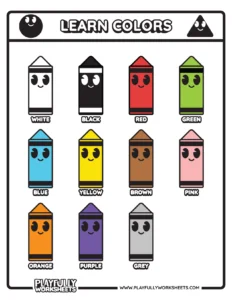
Learn Colors
See and say the colors! Fun pages to help you learn what each color is called.
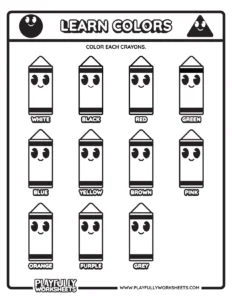
Color each crayons
Time to color! Fun worksheets where you color in things with the right color.
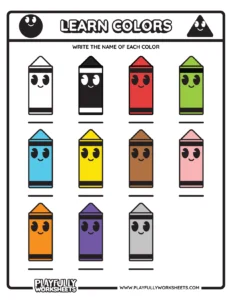
Write the name of colors
Practice writing color words! Learn how to spell the names of all the colors.