

Color mixing is one of the most magical experiences for preschoolers. Watching two colors transform into a completely new one sparks curiosity, excitement, and creativity. Beyond being a fun art activity, mixing colors plays an essential role in developing children’s cognitive, motor, and scientific thinking skills. Through exploration, observation, and discovery, young learners begin to understand cause and effect, while also building their vocabulary and artistic confidence.
What Children Learn When Mixing Colors
When children engage in color mixing, they are not simply playing — they are learning through experimentation. As they blend red and blue to see purple appear, they witness transformation firsthand. This encourages observation skills and helps them understand basic scientific principles such as cause and effect (“When I mix blue and yellow, it changes!”). It also introduces them to early hypothesis testing, where they predict outcomes and compare them with results.
From a developmental perspective, mixing colors enhances fine motor coordination as children manipulate brushes, droppers, or sponges. It also promotes artistic expression, giving them a sense of control and creativity. Each experiment becomes a way to communicate ideas and emotions through color, a vital step before learning to express them through words and writing.
Understanding Primary and Secondary Colors
Before exploring color combinations, it’s important to introduce children to primary colors — red, blue, and yellow. These colors cannot be created by mixing others, but they are the foundation for all other hues. Once children recognize these, they can begin discovering secondary colors — green, orange, and purple — which are formed by combining two primaries.
This simple theory gives children a sense of structure and curiosity about how the world works. You can explain it in simple terms, such as:
“Primary colors are special! When we mix two of them, we get new ones. Let’s see what happens when we mix red and yellow!”
This transforms a scientific concept into a playful, hands-on learning experience.
Educational Benefits of Color Mixing
The pedagogical value of mixing colors goes far beyond art time. It combines learning, creativity, and sensory exploration in one engaging activity.
From a sensory and creative perspective, it stimulates sight, touch, and sometimes even smell (if using scented paints or natural materials). It also encourages scientific curiosity, as children naturally begin asking questions and making discoveries: “Why did it turn brown?”, “What if I add more blue?”
Additionally, this activity strengthens cognitive flexibility and problem-solving. There is no single “right” answer when mixing colors, which helps children become comfortable with experimentation and uncertainty. It’s a great foundation for future learning in both art and science.
How to Guide the Experience
Parents and teachers play a key role in making color mixing both safe and meaningful. Start by preparing materials that are non-toxic, washable, and easy to clean — such as watercolors, food coloring, or tempera paints.
Encourage children to explore freely, but also prompt them to think and observe. Use guiding questions like:
“What do you think will happen if we mix red and blue?”
“Does the color change if you add more yellow?”
These questions foster critical thinking and help children verbalize what they see. Instead of focusing on perfect results, emphasize the joy of observation and experimentation. Every mix is a new discovery!
Try setting up different mixing stations — one with paints, one with colored water, and another with colored clay. This variety keeps children engaged and allows them to connect color theory with multiple sensory experiences.
Tips for Parents and Teachers
Begin by modeling curiosity yourself — children imitate enthusiasm. Keep sessions short to match their attention span, and always celebrate effort rather than perfection. Statements like “Wow, you made a new color!” or “Look how you discovered green all by yourself!” reinforce positive learning experiences.
You can also extend the lesson with outdoor exploration. For instance, go on a color hunt in nature: “Let’s find something that looks like the color we just made!” Connecting the experiment to real-world visuals strengthens memory and vocabulary.
For bilingual learning, repeat color names in English as they appear:
“Look! Blue and yellow make green — green like the grass!”
This repetition supports language acquisition and memory retention while keeping the activity fun and interactive.
To help families and teachers continue exploring at home or in the classroom, we’ve created free printable worksheetsdesigned specifically for early learners. These activities reinforce concepts of primary and secondary colors, while providing tracing, coloring, and mixing exercises that support fine motor and visual learning.
Download our free Mixing Colors Worksheets and bring the magic of color exploration to your preschool activities today.
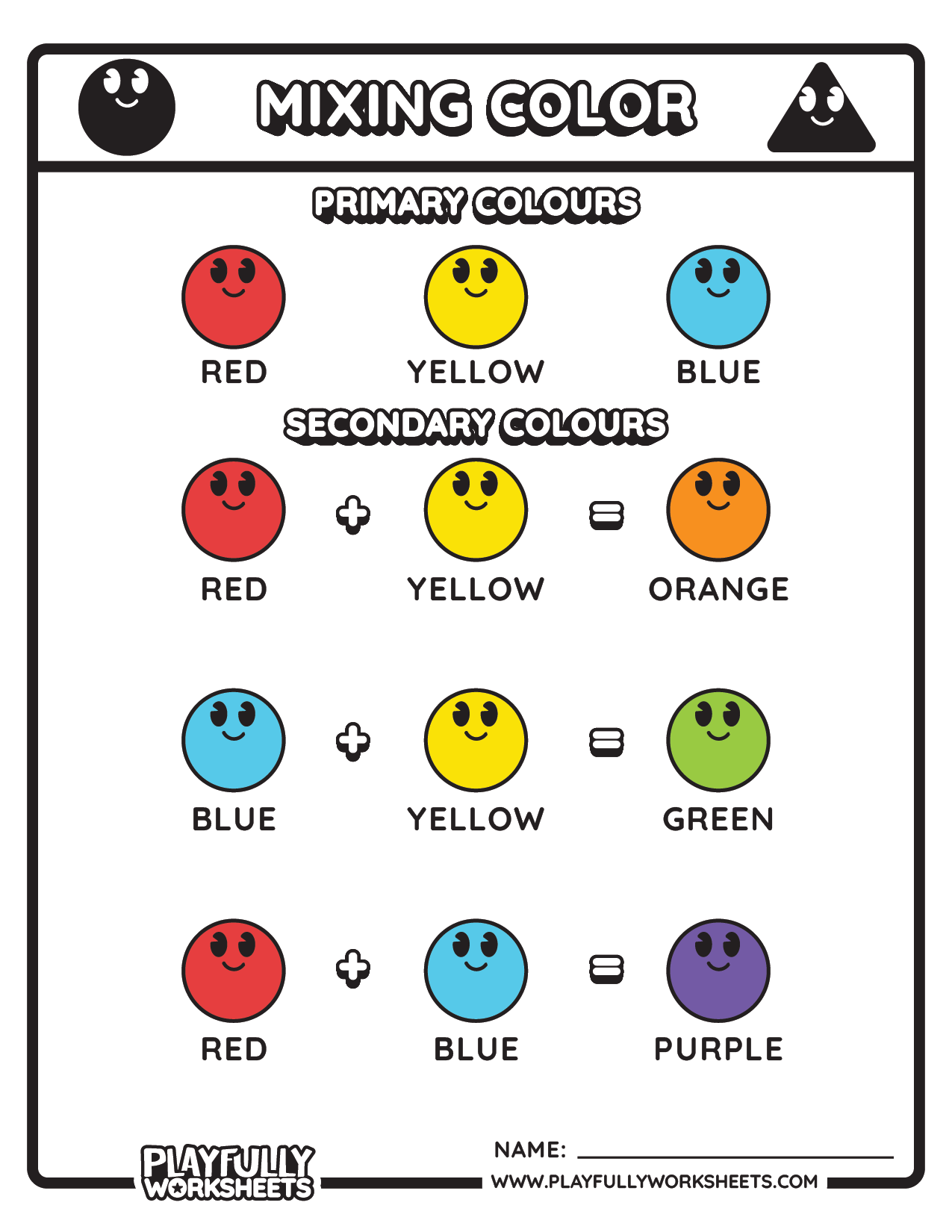
Primary colors mixing
See how primary colors mix! Red and blue make purple, yellow and blue make green, red and yellow make orange. Learn secondary colors!
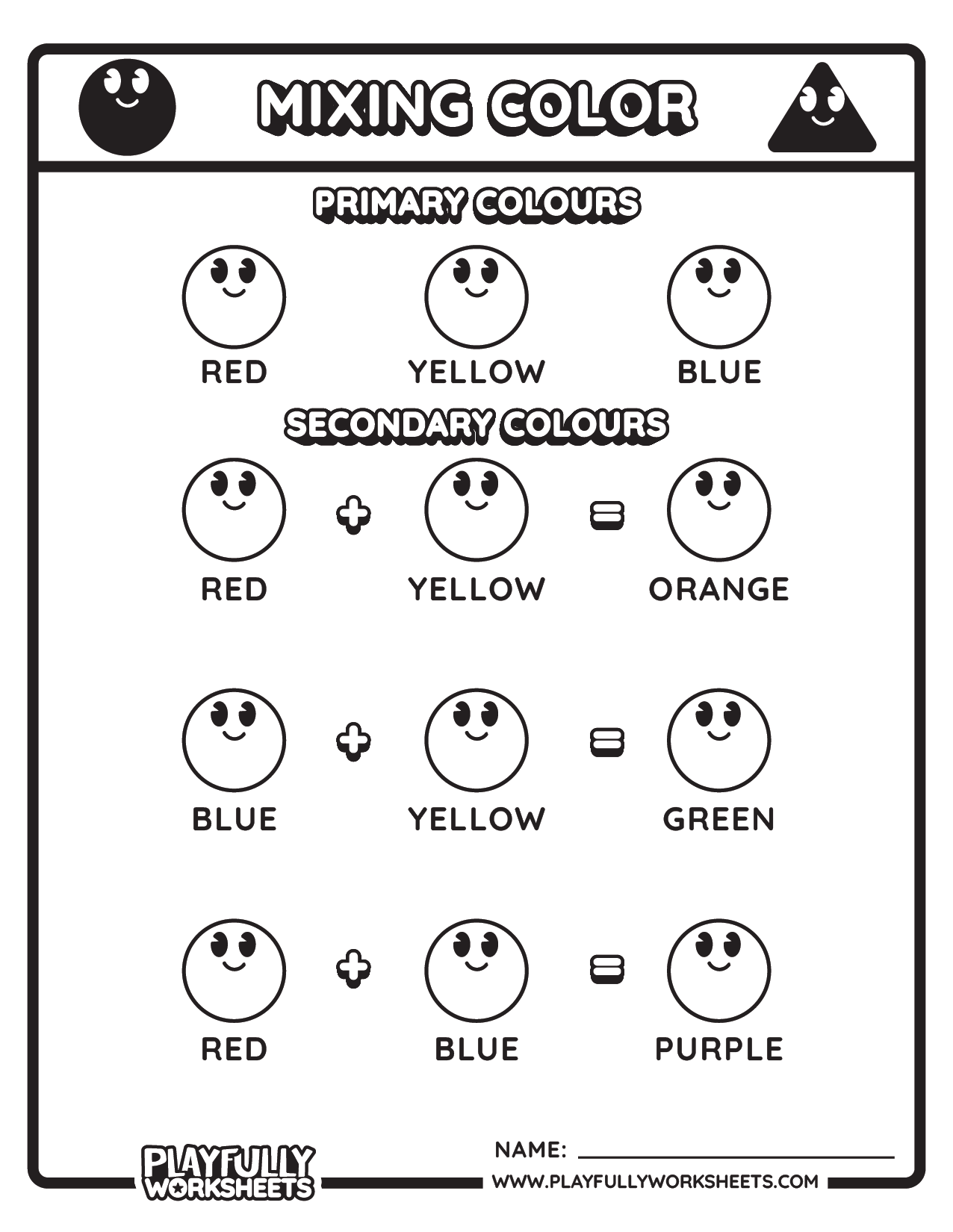
Primary colors mixing Black & White
Mix your own colors! Color the primary colors (red, blue, yellow) and see what secondary color you can make!
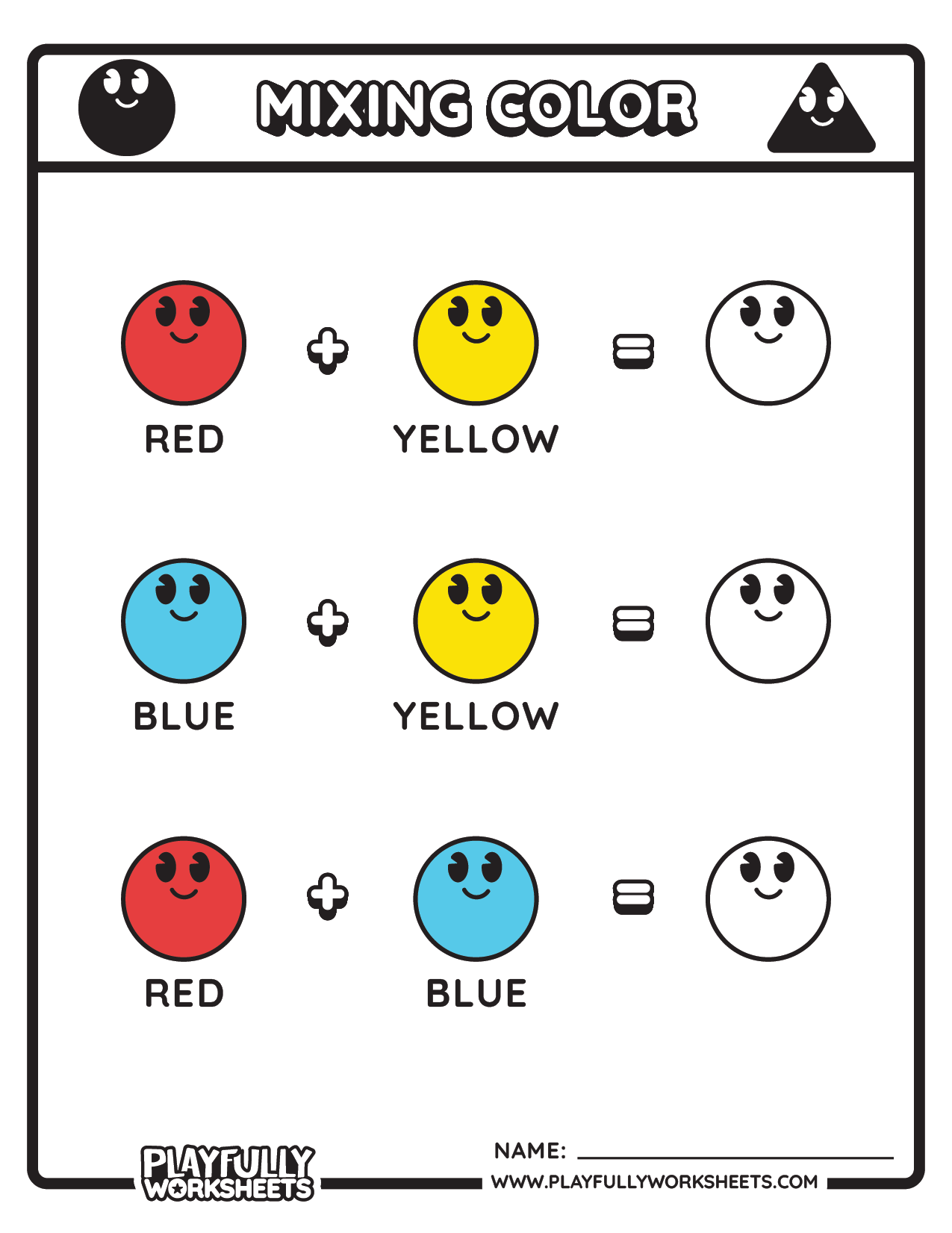
Color the Mix
What color do they make? Color the circle with the color you get when you mix the two colors shown. Fun mixing colors practice!
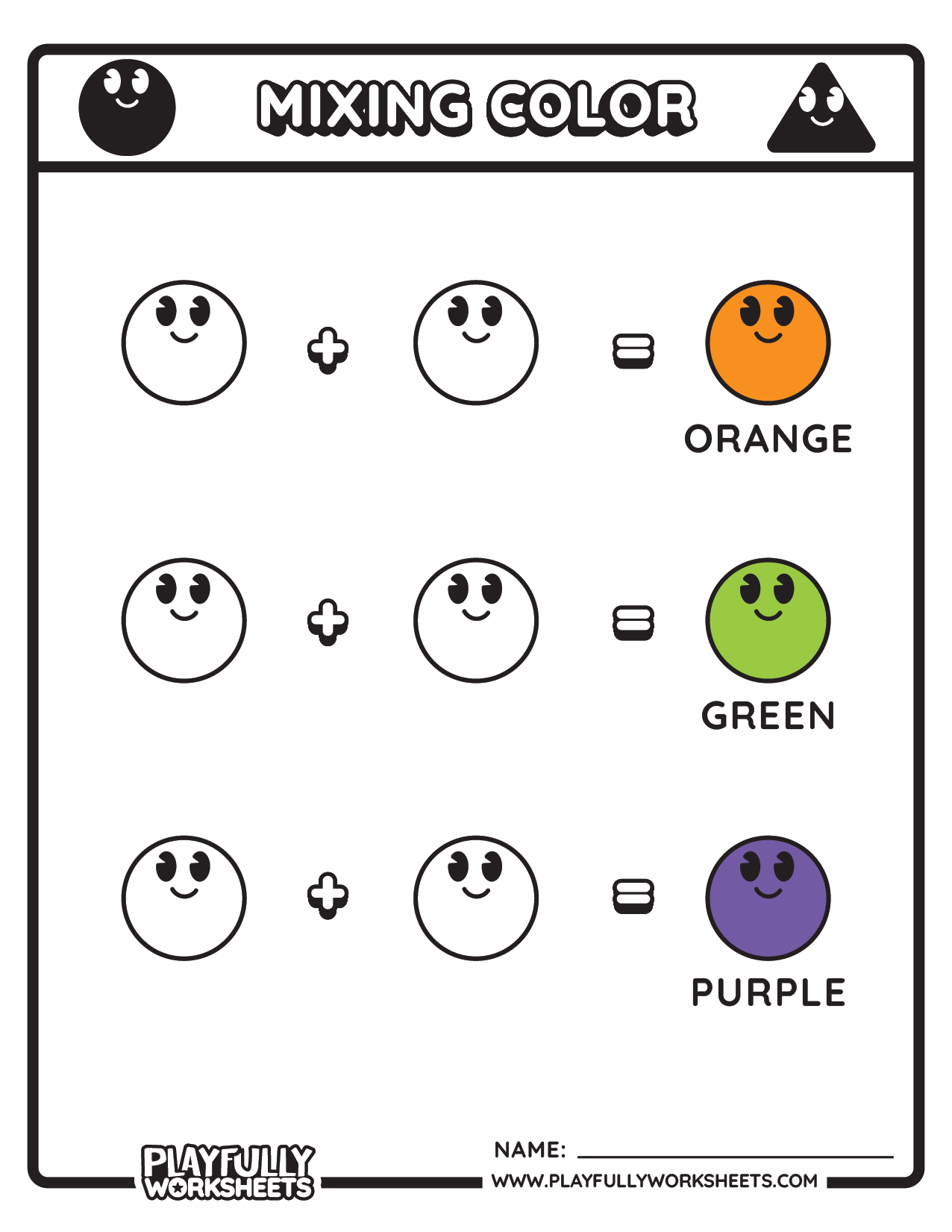
Make That Color
What two colors make this? Color the two primary colors that you need to mix to get the secondary color shown.
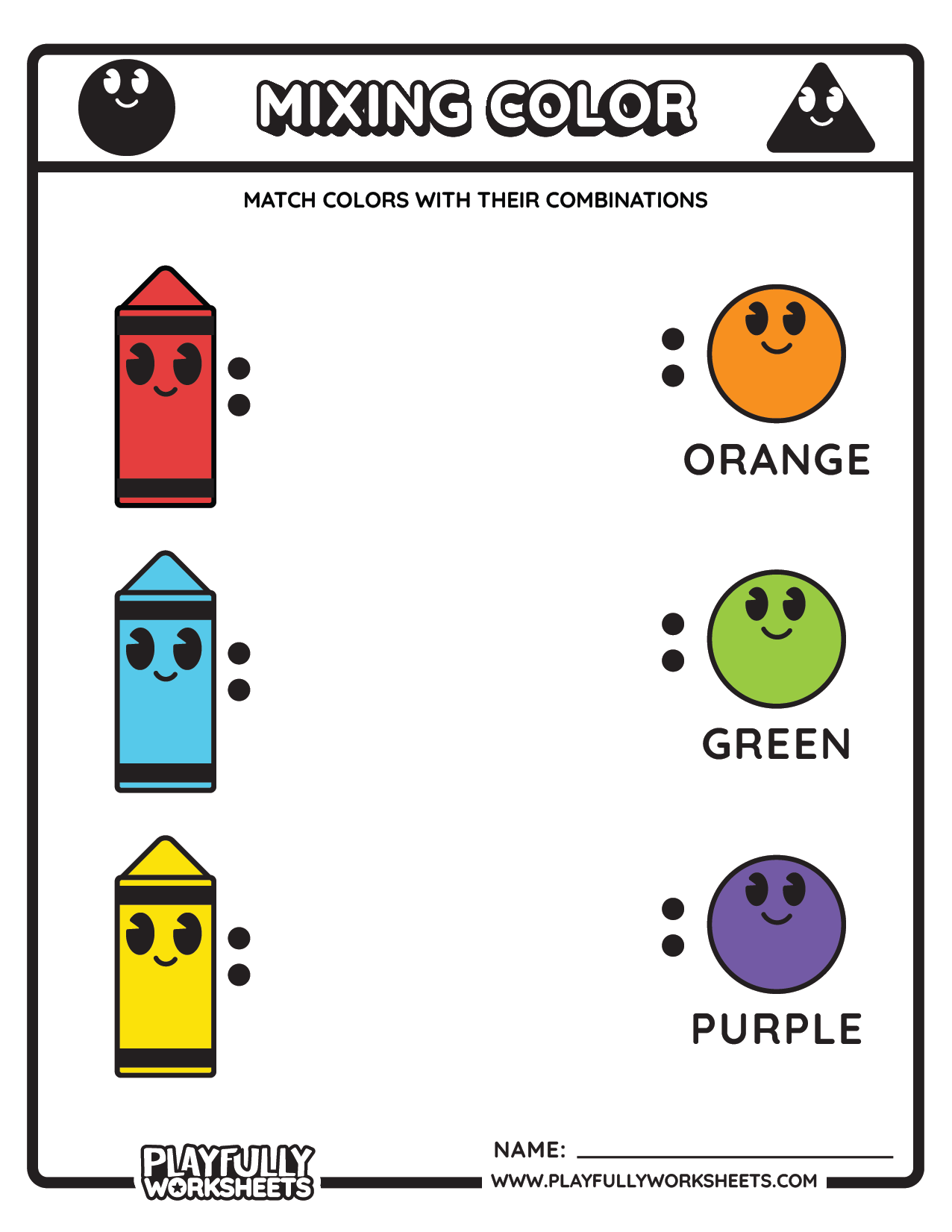
Matching Primary and Secondary Colors
Match the colors that mix together! Draw a line from the primary colors to the secondary color they create.
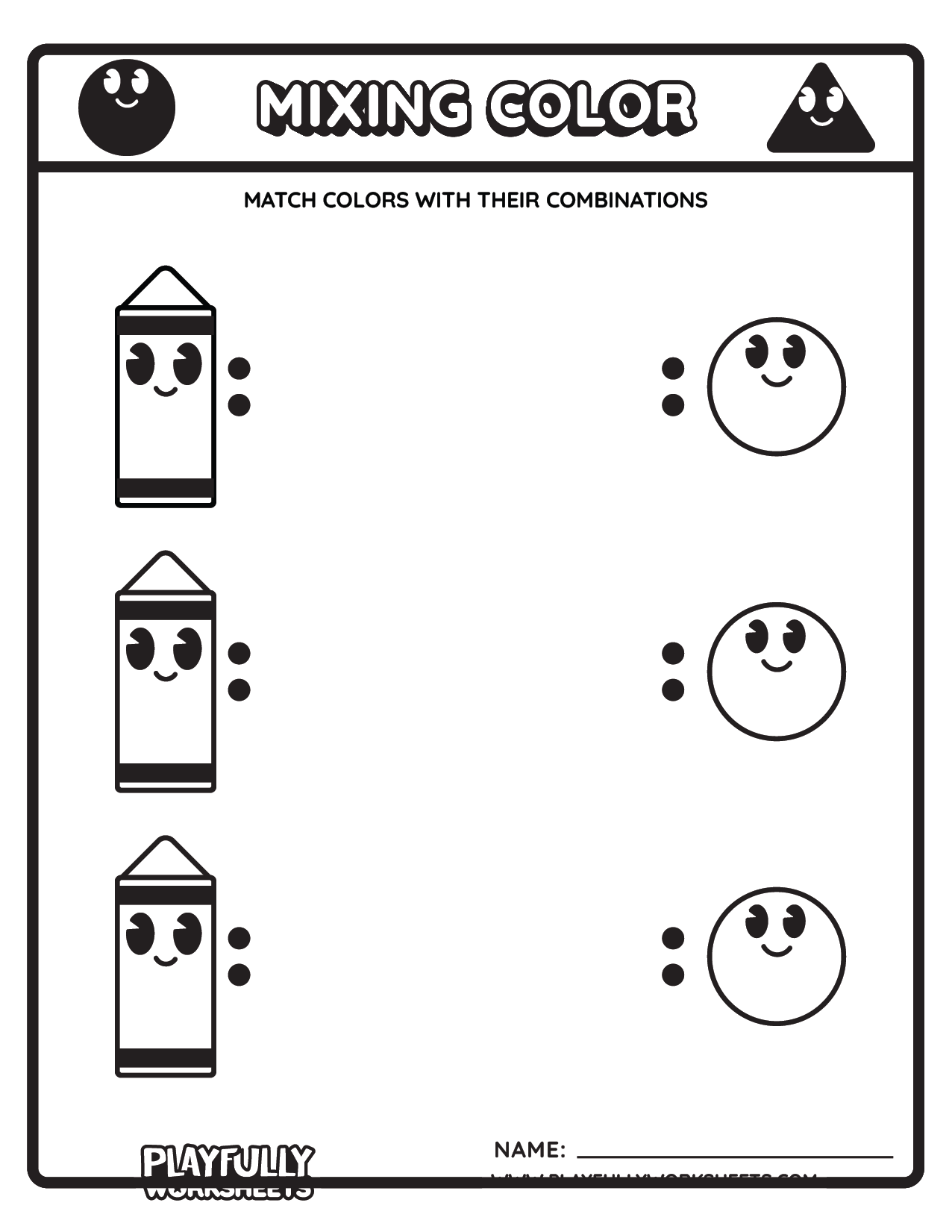
Matching Primary and Secondary Colors Black & White
Color and match the mixing colors! Color the primary colors and the secondary color they make, then draw a line to connect them.
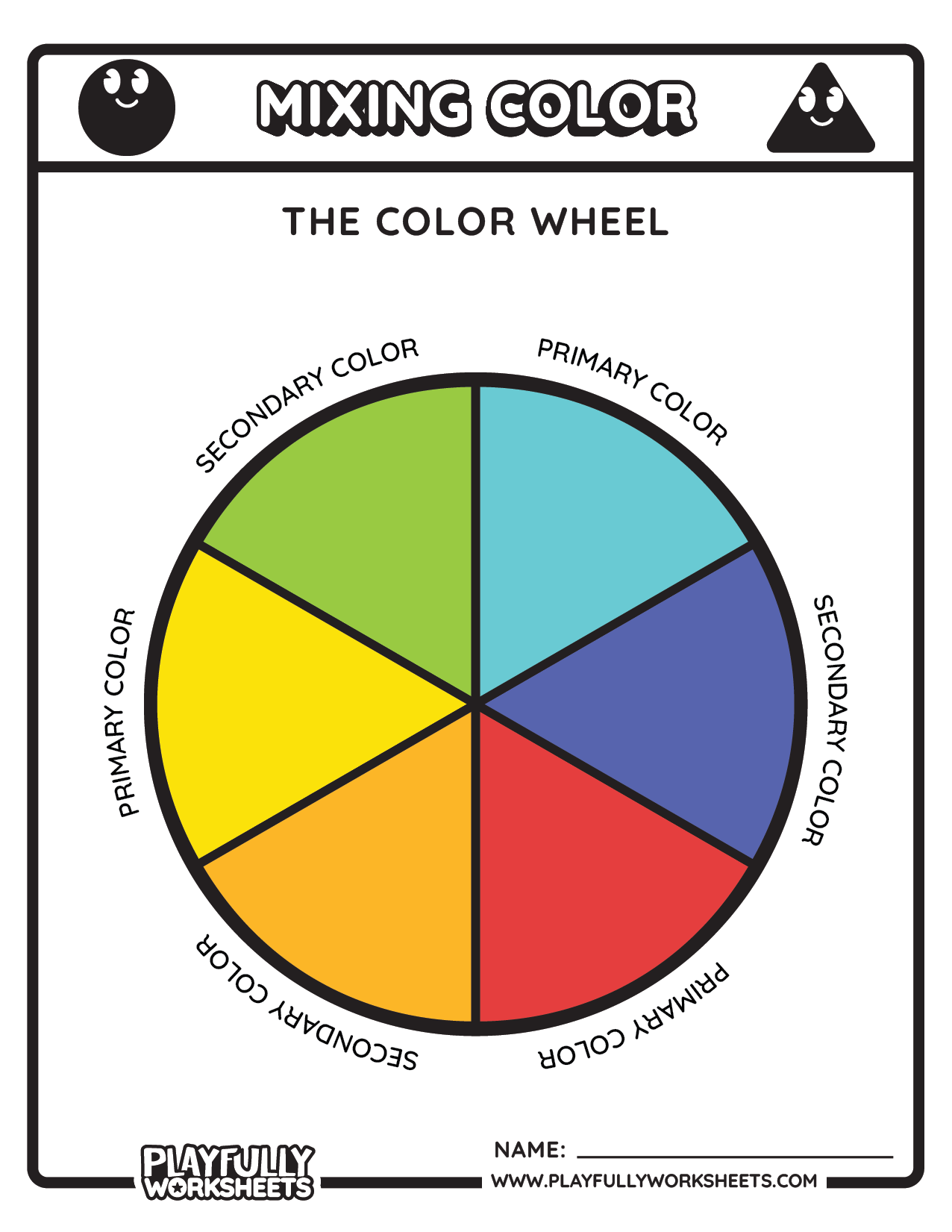
Color Wheel
See the color wheel! Learn how primary and secondary colors are arranged. A colorful way to understand mixing colors!
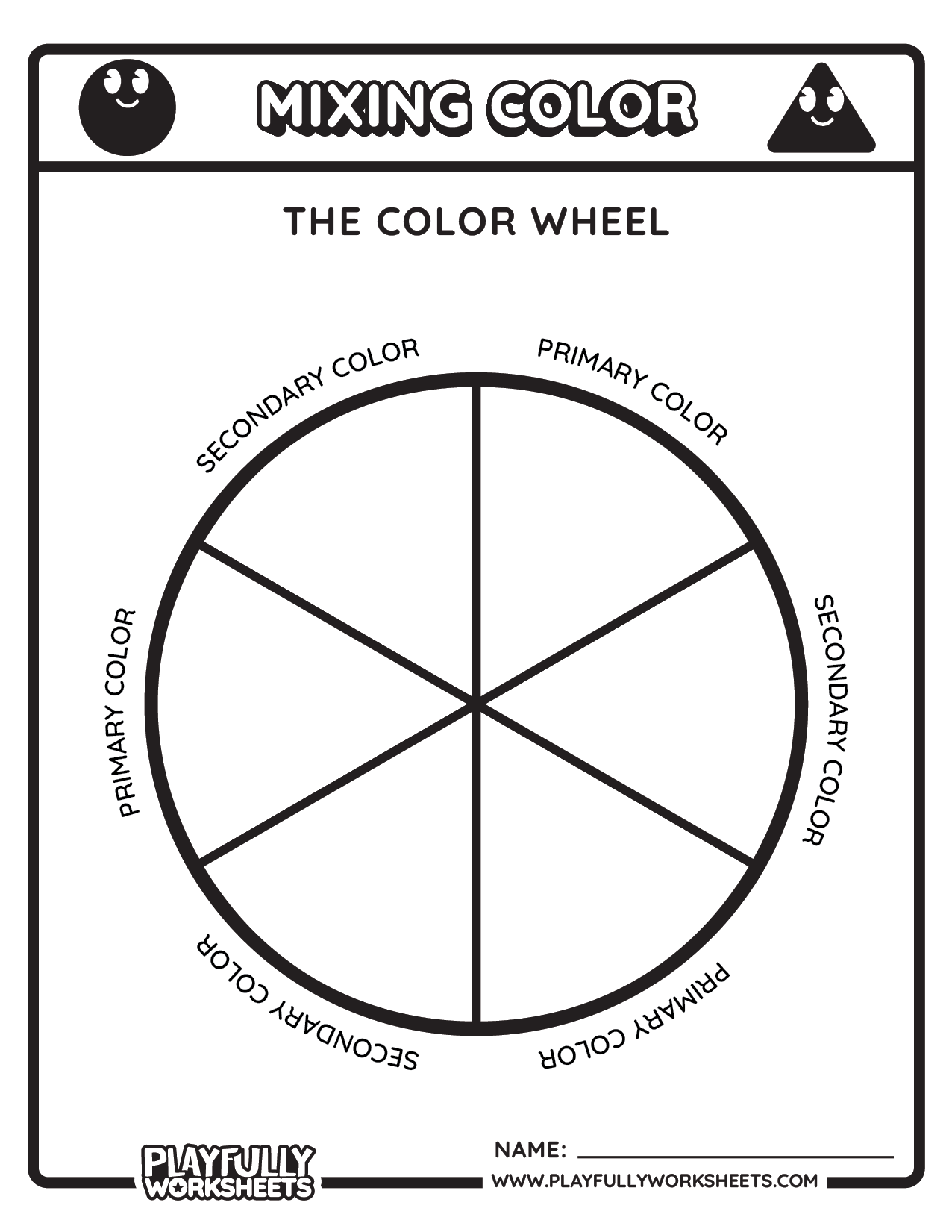
Color Wheel – Black & White
Color your own color wheel! Color the primary and secondary sections. A fun way to learn about mixing colors!