

Fraction charts are simple yet powerful visual tools designed to help children truly understand what fractions represent. Instead of seeing fractions as just numbers on paper, students get to see them as real parts of a whole—something they can point to, compare, and explore. These charts often show circles, rectangles, bars, or grids divided into equal parts so children can identify what one-half, one-third, or three-fourths look like in a concrete way. When young learners connect visuals with numbers, the concept of a fraction becomes much less intimidating and much more meaningful.
Additionally, fraction charts provide the structure that early learners need in the stages of Education, early childhood education, school education, and even special education. The visual clarity helps children distinguish numerators from denominators without confusion and supports students who may need more hands-on or sensory-friendly approaches. Whether you are teaching at home or in a classroom, these charts create an opportunity for Math is fun moments where students genuinely enjoy exploring parts of a whole.
Why Are Fraction Charts Important?
Fraction charts matter because they transform what can feel like an abstract topic into something completely tangible. Instead of memorizing rules or trying to imagine fractions mentally, students see the whole divided right in front of them. This type of visual learning is especially helpful for children who need concrete examples, such as those working with super teacher worksheets, Math worksheets, or early elementary resources like kindergarten worksheets and kdg worksheets. With clear models, children no longer confuse the numerator and denominator, because each value has a specific visual meaning.
Moreover, these charts support conceptual understanding long before students tackle equivalent fractions or more complex operations. They allow learners to compare sizes, understand proportion, and recognize fractional relationships naturally. As students move through grade levels, fraction visualizations continue to be essential, especially when working with equivalent fractions worksheets or conversion activities. The consistent structure of a fraction chart helps students build confidence from early childhood education through upper elementary grades.
Benefits of Using Fraction Charts in the Classroom or at Home
Using fraction charts regularly creates a bridge between memorization and real understanding. Many students struggle with fractions because they cannot visualize them, but once they see the pieces laid out, everything begins to make sense.
This visual connection improves memory retention and strengthens long-term comprehension.Children begin to notice patterns, compare sizes, and reason through problems with growing independence, making Math worksheets and happy numbers activities far more effective.
Furthermore, these charts fit beautifully into a variety of learning environments. Whether you are homeschooling, tutoring, or teaching in a traditional classroom, fraction charts provide a supportive structure. They are ideal for centers, small groups, homework, intervention, and enrichment. Students who struggle with traditional explanations often thrive with hands-on visuals, while confident learners use charts to deepen their reasoning. This flexibility ensures that fraction charts remain useful tools for any learning style.
Types of Fraction Charts
Fraction charts come in many formats, and each one supports children’s learning in a slightly different way. Understanding these differences helps parents and educators choose the right tool for each stage of instruction.
Fraction circles, often called pie models, visually split a whole into “slices.” Because they resemble real-life objects like pizzas or pies, children quickly grasp the idea of dividing something into equal parts. These circles are excellent for exploring foundational fractions such as halves, thirds, fourths, sixths, or eighths, and they help students see how each slice represents a portion of the whole.
Fraction bars or strips provide a more structured way to compare fractions. Their rectangular shape makes it easy to align different fractions horizontally and visually judge which one is larger or smaller. This format is especially useful when introducing equivalent fractions, because children can directly observe how two differently sized bars can still represent the same value when lined up.
Fraction grids and area rectangles add another layer of conceptual understanding. These charts help students connect fractions to area models, making them ideal for teaching tenths, twelfths, or hundredths. As students shade portions of a grid, they reinforce their understanding of how fractions relate to parts of a whole and to decimal place value.
In more advanced stages, equivalent fraction charts guide students as they learn that one quantity can be expressed in several forms—like 1/2, 2/4, or 4/8.
Similarly, charts showing improper fractions and mixed numbers help bridge early learning with more complex topics. They support students as they transition from simple part–whole relationships to operations involving fractions.
Overall, the variety of fraction charts gives learners multiple pathways to understanding. By seeing fractions represented in different ways, children build confidence, strengthen number sense, and develop the flexibility needed to succeed in more advanced math.
Activities You Can Do With Fraction Charts
Fraction charts open the door to countless hands-on learning opportunities that feel more like play than traditional lessons. Children naturally enjoy coloring, shading, and identifying fractional pieces, and these actions help them internalize what each fraction represents. When students color the fraction the teacher calls out, they reinforce both the value and its placement on the chart. This makes learning feel interactive, joyful, and deeply memorable.
To keep this learning momentum going, we invite you to download our free fraction chart printables and worksheet bundles. These resources are designed to make Math is fun, accessible, and engaging for all learners. Share this article with other teachers or parents who may benefit, and continue building strong foundational understanding through simple, powerful visuals that truly work.
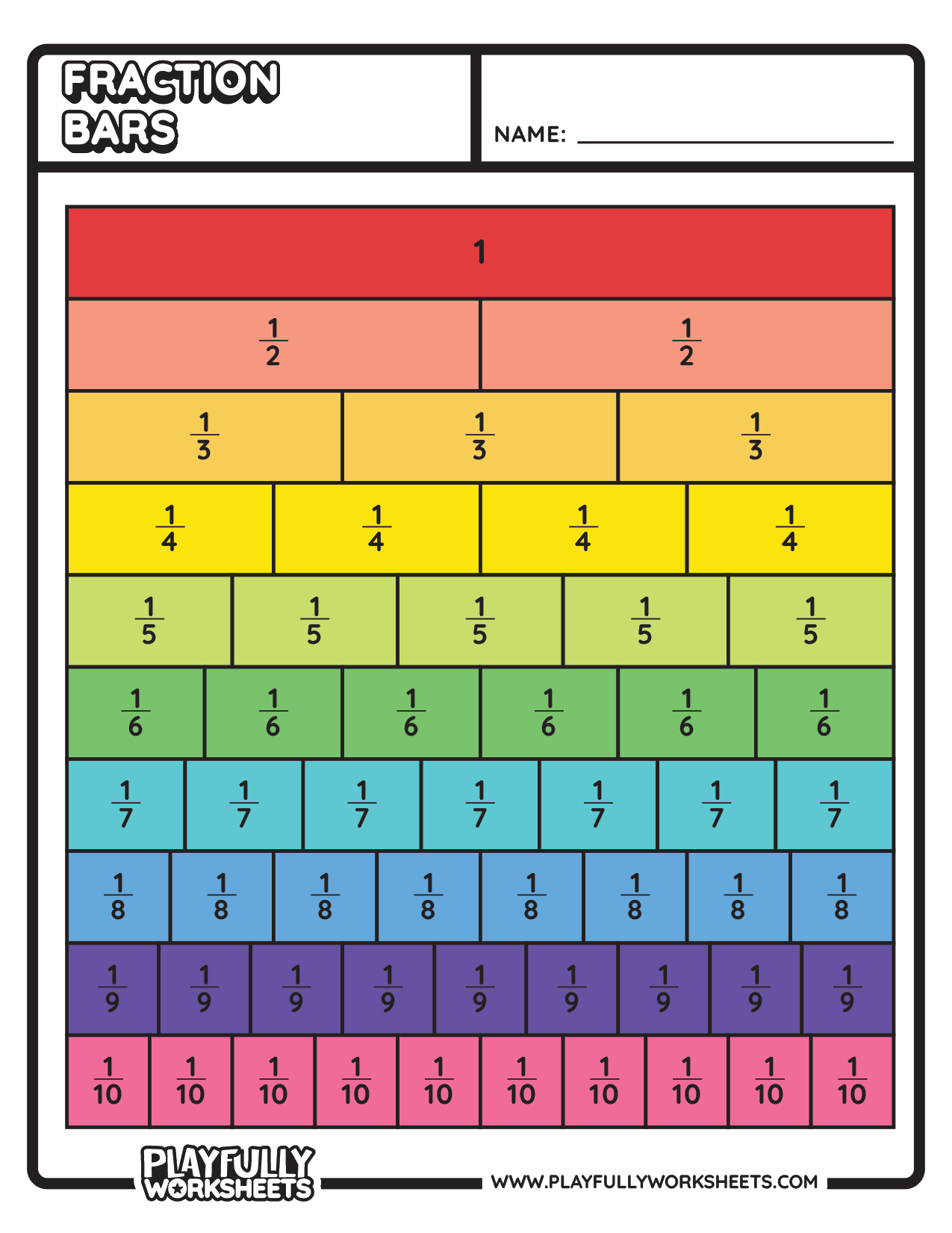
Fractions Bars / Fractions Strips
Explore fractions visually with our Fractions Chart Strips worksheets! Each strip is divided to show different parts of a whole, from one whole bar down to ten equal sections representing tenths. These fraction strips offer a clear way to understand how fractions represent portions of a whole, making learning about these math concepts easier and more concrete for young learners. Use these fraction chart tools to build a strong foundation.
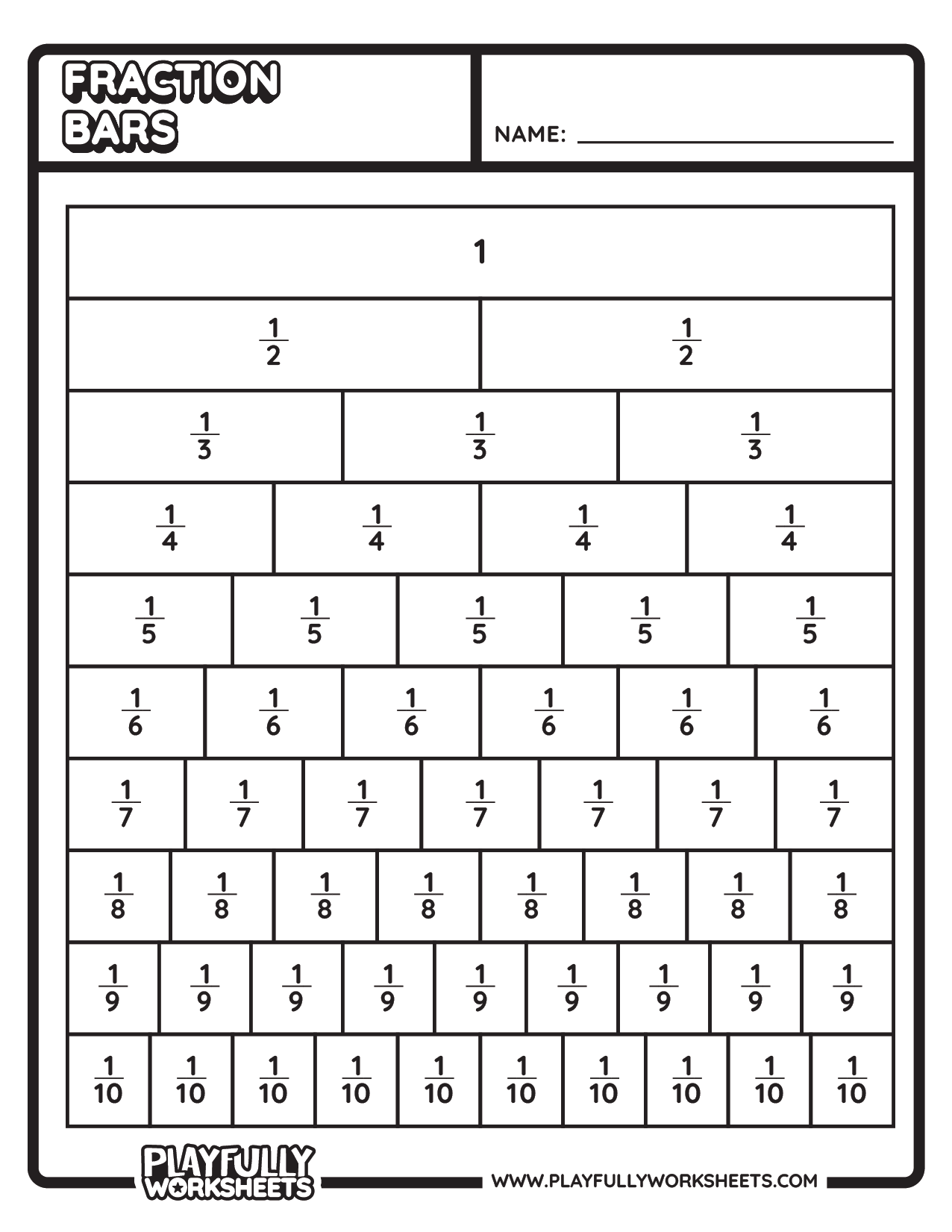
Fractions Chart Bars B&W
Make learning about fractions interactive with our Black & White Fractions Bar worksheets! These strips are ready for you to color in and represent various fractions. By coloring the different sections, you can create your own visual fraction chart and gain a hands-on understanding of how a whole can be divided into equal parts. This activity reinforces the concept of fractions and makes learning more engaging.
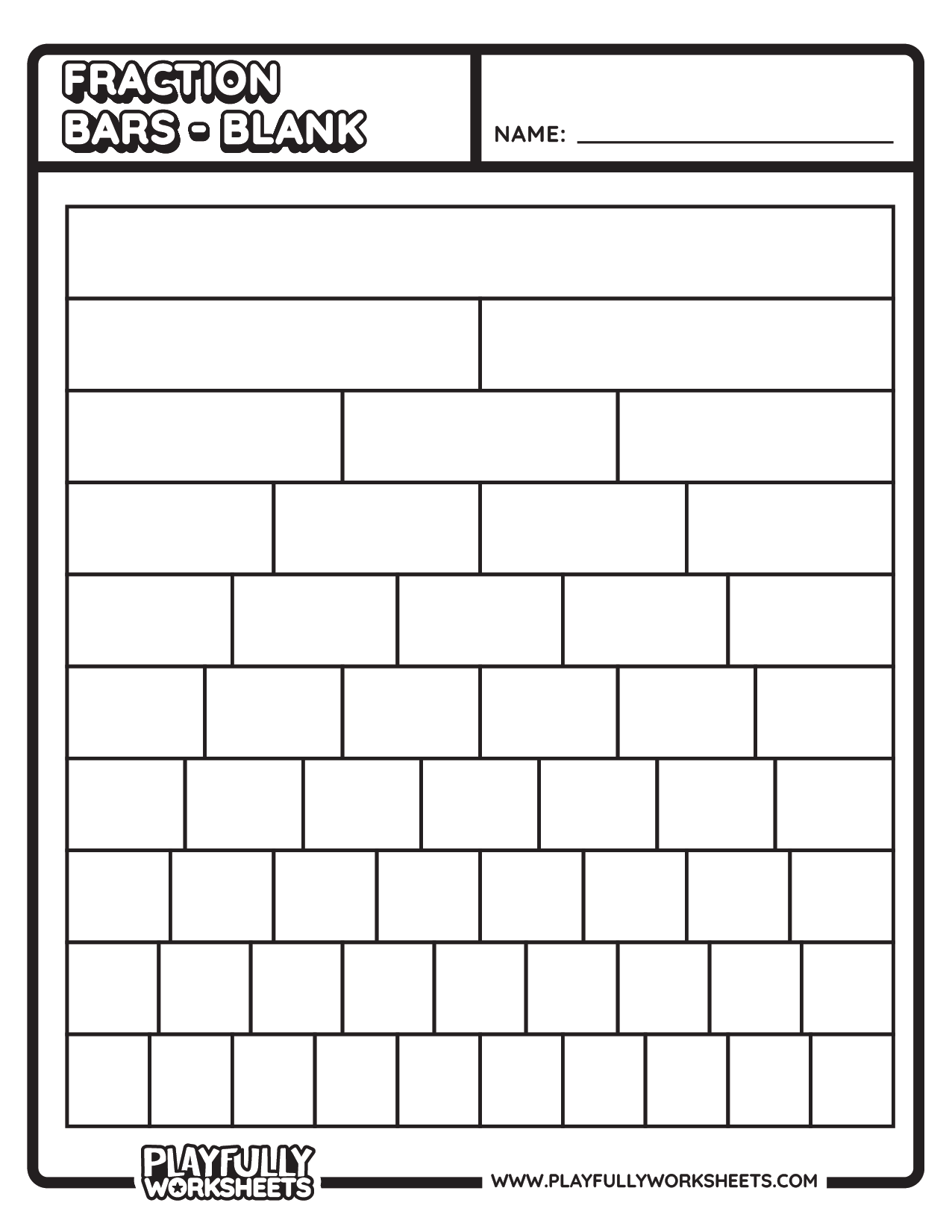
Fractions Chart Bars Blank
Take your fraction learning further with our Blank Fractions Strips worksheets! These empty strips allow you to divide and color them yourself to represent any fraction you choose. Plus, there’s space to write the fraction that each colored part represents. This active approach helps solidify your understanding of fractions and their visual representation, acting as your personal fraction chart in the making.
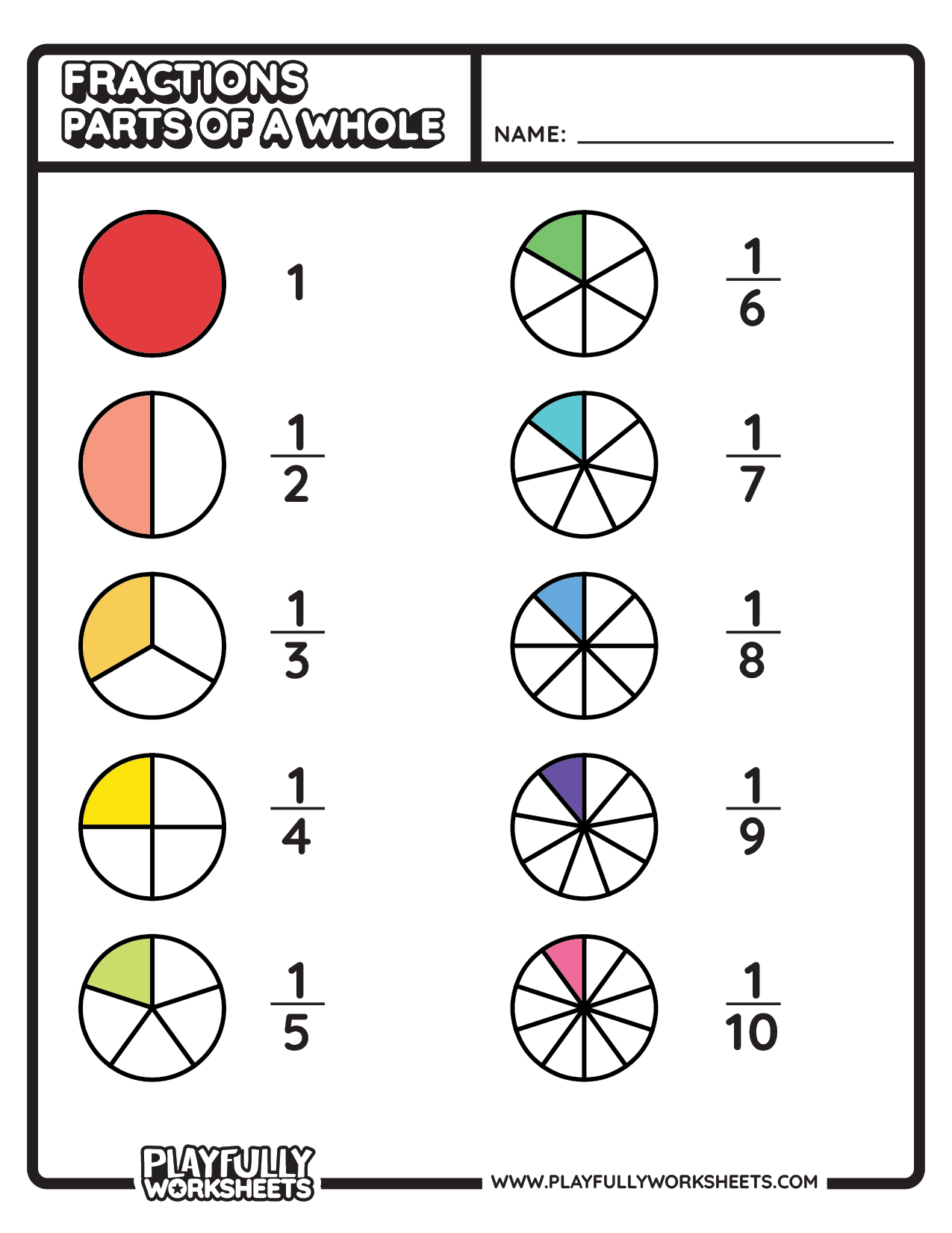
Fractions Charts
Understand fractions in a circular way with our Colored Fractions Circles worksheets! Each circle shows a fraction where just one part is colored, from a whole circle down to a circle divided into ten parts with one shaded. These visual examples clearly illustrate how fractions represent a portion of a whole, providing an easy way to grasp concepts like halves, thirds, and tenths using a fraction chart.
Fractions Charts B&W
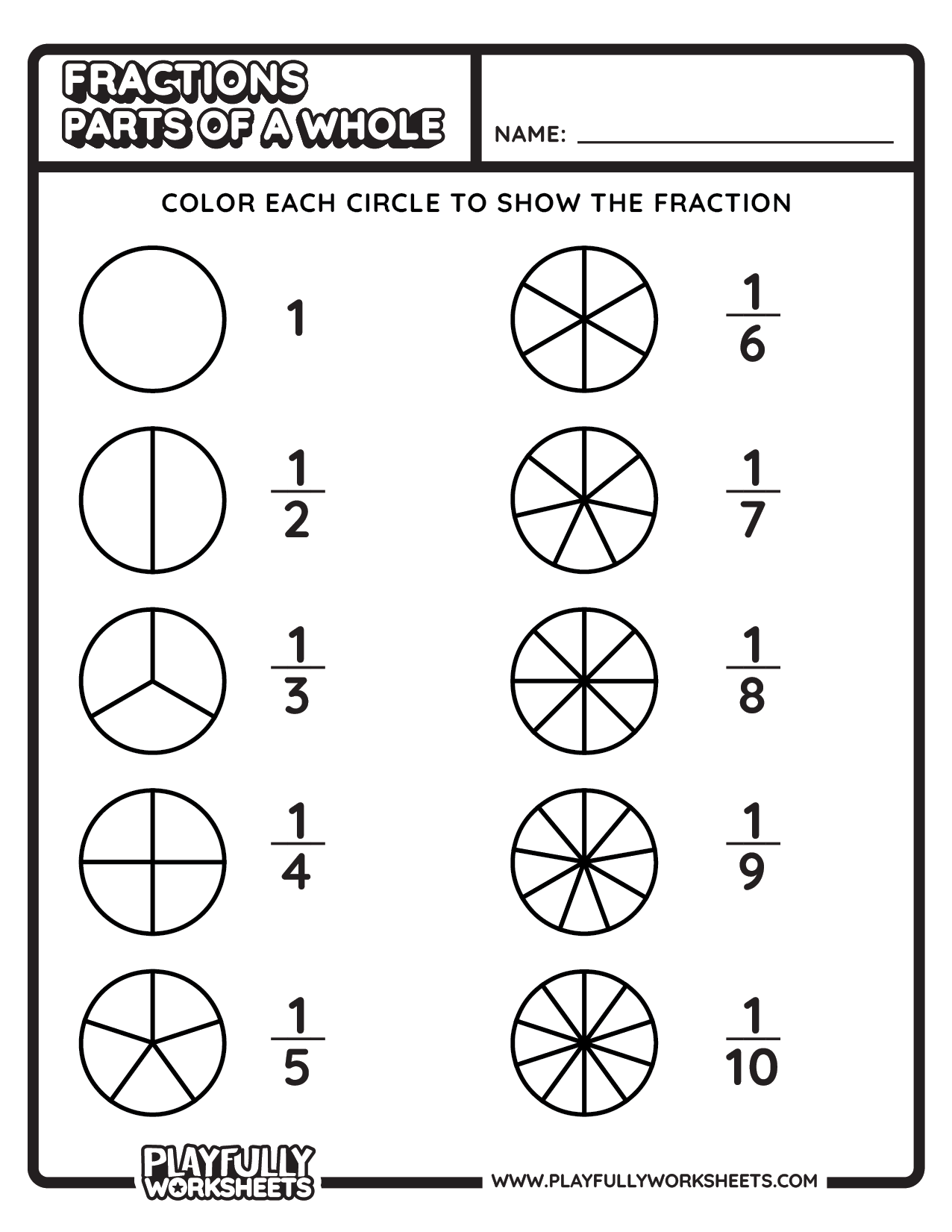
Get hands-on with fractions using our Black & White Fractions Circles worksheets! These circles are waiting for you to color them to show different fractions. By shading in the correct number of parts, you’ll create your own visual representation of fractions, reinforcing your understanding of how a whole can be divided. This coloring activity makes learning about fractions engaging and memorable.
Fractions Chart Examples
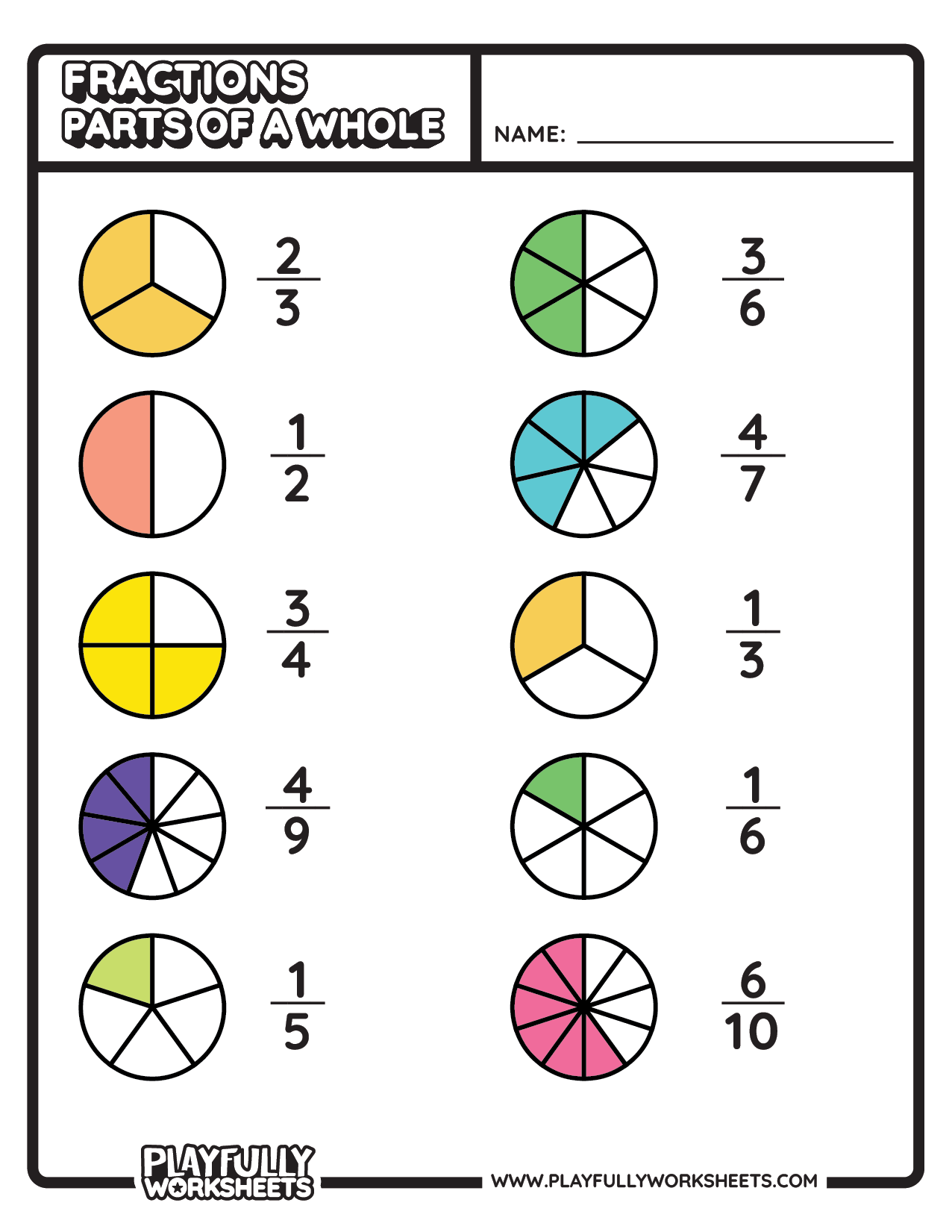
Explore various fractions with our “More Fraction Examples” worksheets! These visual aids help you understand fractions beyond just one part being shaded, illustrating how multiple parts represent a fraction of a whole. Expand your knowledge of fractions with these clear examples.
Coloring Fractions Worksheet
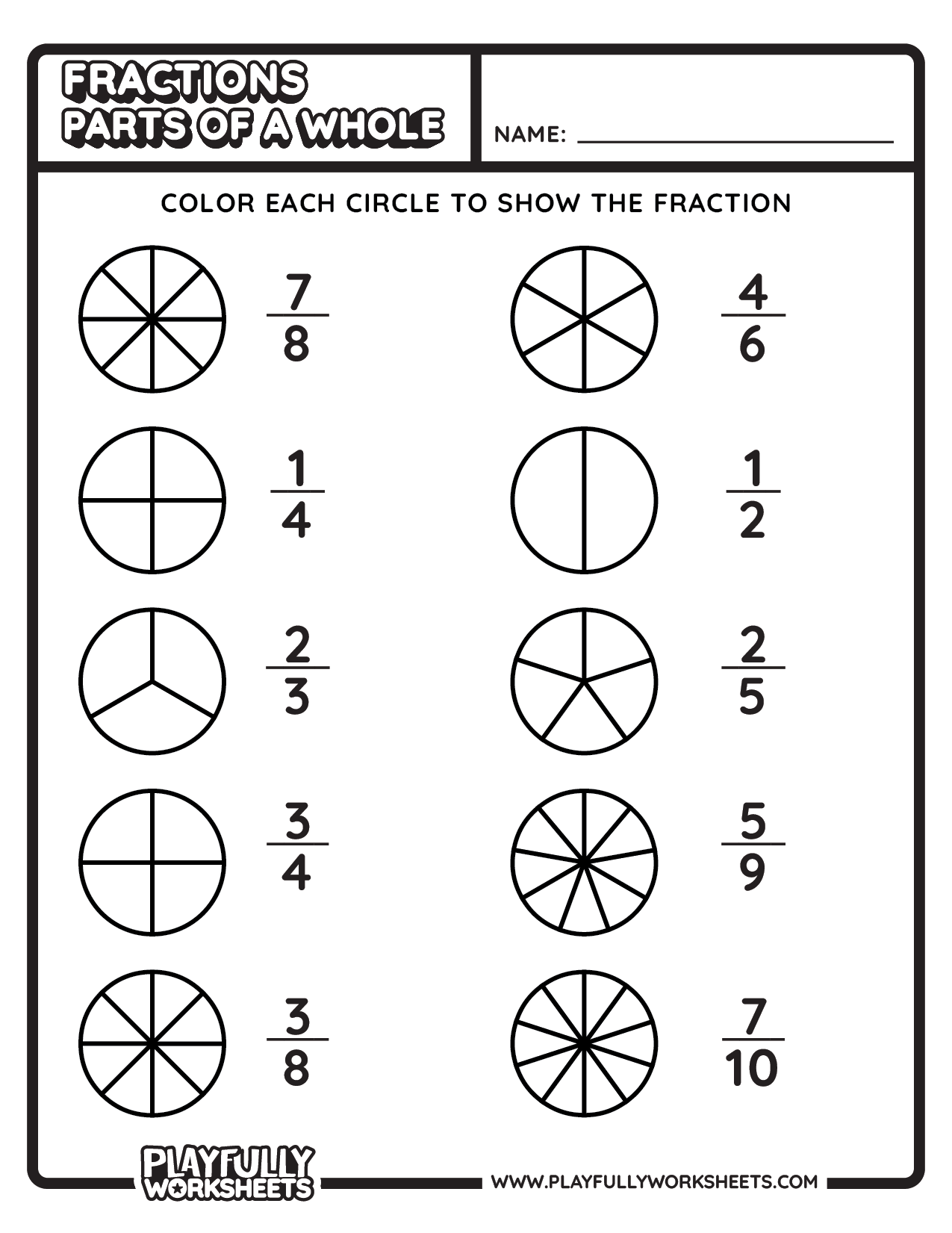
Practice representing fractions visually with our “Color the Fraction” worksheets! For each problem, you’ll see a circle divided into equal parts, and a fraction will be given (like 1/2, 2/3, or 3/4). Your task is to color in the correct number of parts of the circle to match the fraction shown. This hands-on activity reinforces your understanding of what fractions mean and how they look. Have fun coloring and learning about fractions!
Identify fractions
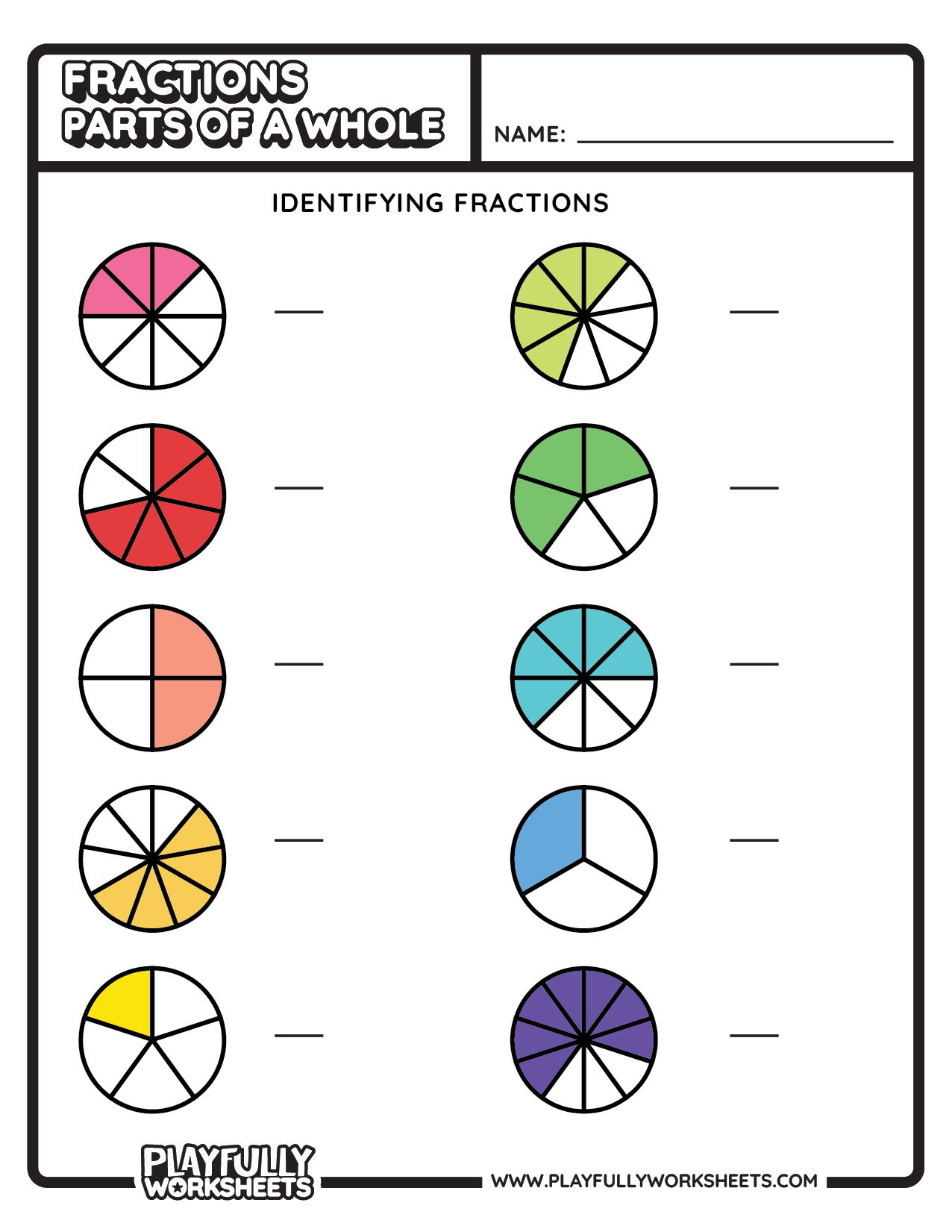
Test your fraction knowledge with our “Identify the Fraction” worksheets! Each of the ten problems features a visual fraction chart, and your task is to write down the fraction that the shaded part represents. This exercise helps you practice recognizing fractions in different visual forms and strengthens your understanding of how fractions relate to a whole. It’s a great way to assess your grasp of fractions.
Option 2
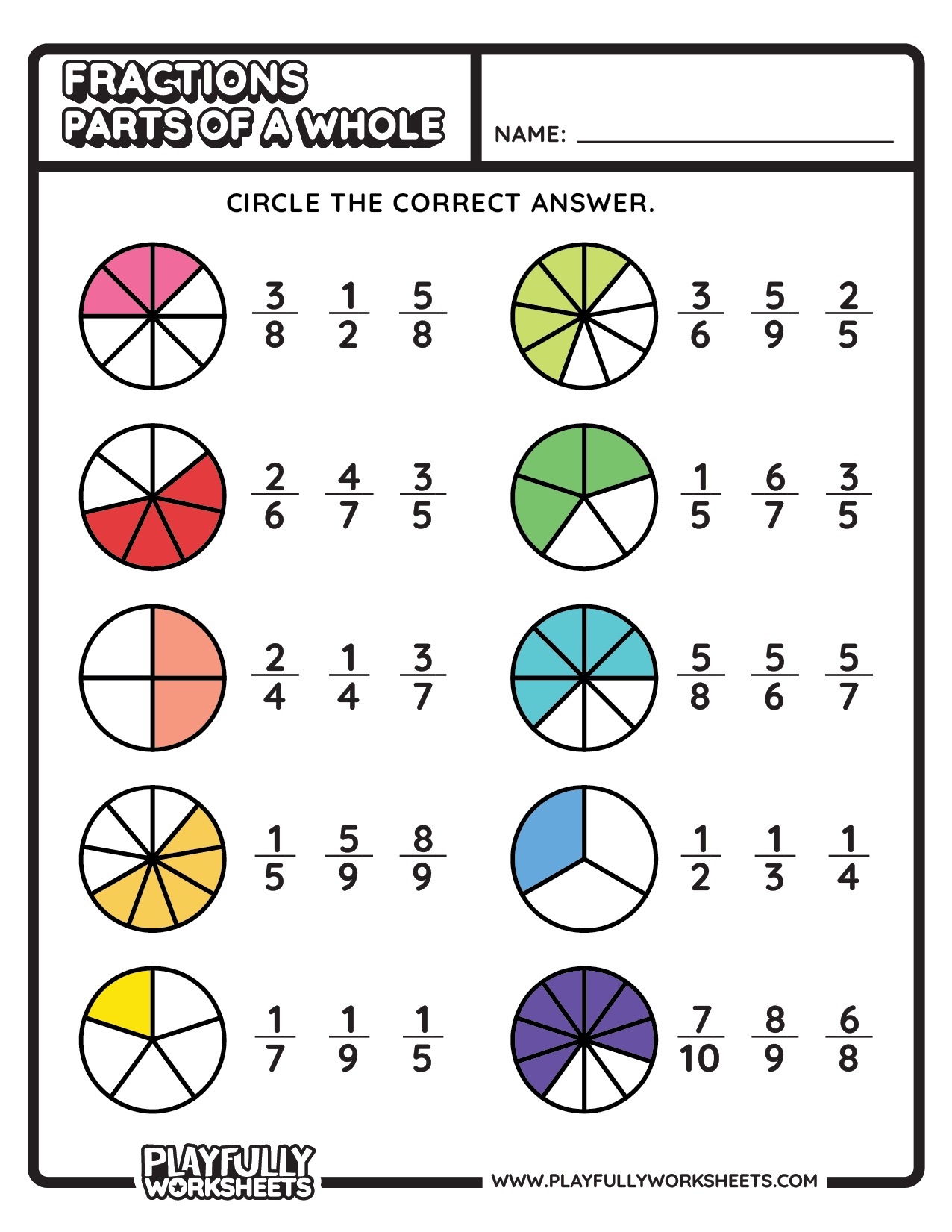
Circle the Correct Fraction
Practice your fraction recognition skills with our “Circle the Correct Fraction” worksheets! For each of the ten visual fraction chart examples, you’ll be given three fraction choices. Your mission is to carefully look at the shaded part and circle the one fraction that correctly represents it. This multiple-choice format provides a fun and engaging way to reinforce your understanding of fractions and their visual equivalents.
Option 2