

CVC words may look simple on the surface, yet they are one of the most powerful tools in early childhood education. These short consonant–vowel–consonant words give children their very first taste of successful reading, which is why they appear so frequently in super teacher worksheets, kindergarten worksheets, and early phonics programs. When a child reads “cat,” “map,” or “sun” for the first time, something magical happens—they suddenly realize that print carries meaning and that they can decode it. This moment of recognition truly transforms learning and gives children confidence that stays with them throughout school education.
Parents and teachers often see CVC words as the bridge between isolated letter sounds and real reading. Because these words use predictable short vowel patterns, they become the perfect playground for blending skills. Children begin understanding how sounds come together, and this decoding process strengthens their reading foundations in ways that memorization alone never could. As a result, CVC words naturally become essential elements in cvc words worksheets, kindergarten activity sheets, kg activity sheets, and other early literacy resources used both at home and in the classroom.
The Anatomy of a CVC Word
A CVC word follows a simple structure: one consonant, one short vowel, and one consonant again. Although this pattern seems basic, it holds immense power for young readers. The initial consonant provides the starting point, the short vowel anchors the middle sound, and the final consonant helps close the word in a way that is predictable and easily blendable. Children quickly learn that each letter makes just one sound in this pattern, and that simplicity allows them to decode successfully even at a very early age. This is why CVC words for kg and cvc words for kindergarten worksheets remain some of the most common printables in early childhood classrooms.
The short vowel is the heart of the CVC pattern, and teaching children to hear and pronounce these vowels accurately is key. Many beginners confuse /i/ with /e/ or /a/ with /u/, so giving them repeated exposure through cvc words worksheets is incredibly helpful. As children gain confidence, they begin comparing CVC words with other structures such as CV words (“go”), CCVC words (“frog”), and CVCe words (“cake”). These comparisons enhance phonemic awareness while also demonstrating how small spelling differences can change a vowel sound completely. Within special education and structured literacy programs, this level of clarity becomes even more important for students who need consistent routines and predictable patterns.
Why CVC Words Are the Gateway to Reading
Every experienced teacher knows that once children can decode CVC words, the entire world of reading opens up. This is because CVC words represent the earliest moment where reading shifts from guesswork to true phonetic decoding. When a child blends /c/ + /a/ + /t/ and genuinely reads “cat,” they experience a sense of ownership and pride that encourages them to keep trying. Those first steps toward independence are deeply motivating, and they support all future reading tasks across school education.
Furthermore, CVC words help train the brain to connect phonemic awareness with print in a meaningful way. Neurologically, blending strengthens neural pathways responsible for reading fluency, and repeated exposure through cvc worksheets or free kindergarten worksheets helps firm up those connections. Over time, children become more efficient and automatic with decoding, which is exactly what they need as they transition into longer words, blends, digraphs, and vowel patterns.
How Children Learn to Blend Sounds
Although blending may seem simple to adults, it is actually a surprisingly challenging skill for young readers. Many children can recognize individual letter sounds, yet struggle to merge them smoothly. They might say /c/… /a/… /t/ with long pauses, and then guess a completely unrelated word. This is extremely common in early childhood education, and cvc word list activities give learners a safe and predictable space to practice without stress. Parents and teachers can support blending by modeling how the sounds stretch together, slowly saying “caaaaat” until the child hears the full word.
In the beginning stages, children also tend to drop or swap sounds. They might replace the ending consonant, or skip the vowel altogether, which can make reading feel frustrating. Because of this, cvc words worksheets and cvc words for kindergarten worksheets often include repeated practice with the same word families. Hearing and seeing the pattern multiple times helps students blend more smoothly and reduces the cognitive load they feel when encountering new words.
Common Errors Children Make—and How to Fix Them
Many beginners confuse short vowels, especially /i/ and /e/, or mix up /a/ and /u/. These confusions are normal, and they usually disappear with consistent exposure through CVC activities. Using cvc words list printables and repeating words in small, intentional routines helps children refine their ears and strengthen their articulation. Sometimes children also change the first or last sound, especially when they are rushing. Slowing down, using finger tapping, or stretching each sound gently can make a huge difference.
Another common issue is guessing. If a child sees “cat,” they might quickly say “can” simply because they recognize the first and last letters. This pattern develops when children depend too much on sight word memorization instead of decoding. Encouraging them to touch each letter, whisper the sound, and then blend helps redirect their focus. This is why decoding—not memorizing—is essential during early literacy development.
Teaching CVC Words in Just 5 Minutes a Day
Busy parents and teachers often feel like there isn’t enough time for meaningful phonics practice. The good news is that CVC routines can be incredibly short and still highly effective. Even a quick five-minute session using cvc worksheets or oral blending games can make a noticeable difference. Simple micro-reading activities, where children practice three to five words each day, help cement learning without overwhelming them.
Because repetition is crucial, these short bursts of practice are perfect for car rides, transition times, or morning warm-ups in kindergarten classrooms. With consistency, children begin to internalize patterns naturally, and their decoding becomes faster and more accurate. These routines blend seamlessly into kindergarten activity sheets, kg activity sheets, and daily literacy centers.
How CVC Words Build Vocabulary
Even though CVC words are short, they play a big role in vocabulary development. Words like “cat,” “map,” “hug,” and “pen” appear constantly in early readers, giving children repeated exposure in meaningful contexts. When they decode these words effortlessly, comprehension becomes smoother and more enjoyable. This foundation helps students read simple stories independently, strengthening both their language skills and their love for reading.
Children who master CVC decoding early often show better fluency and stronger comprehension later on. These words act as stepping stones, helping learners expand vocabulary through structured reading practice and meaningful use.
CVC words are more than simple combinations of letters—they are the heart of early reading success. Whether used in early childhood education, special education, or traditional classroom settings, these predictable patterns help children understand how print works. With consistent exposure through cvc words worksheets, free kindergarten worksheets, and daily decoding routines, young learners gain confidence, fluency, and the foundation they need for lifelong reading.
If you want to support your students or your child even more, you can download our free CVC worksheets designed to make learning structured, fun, and developmentally appropriate
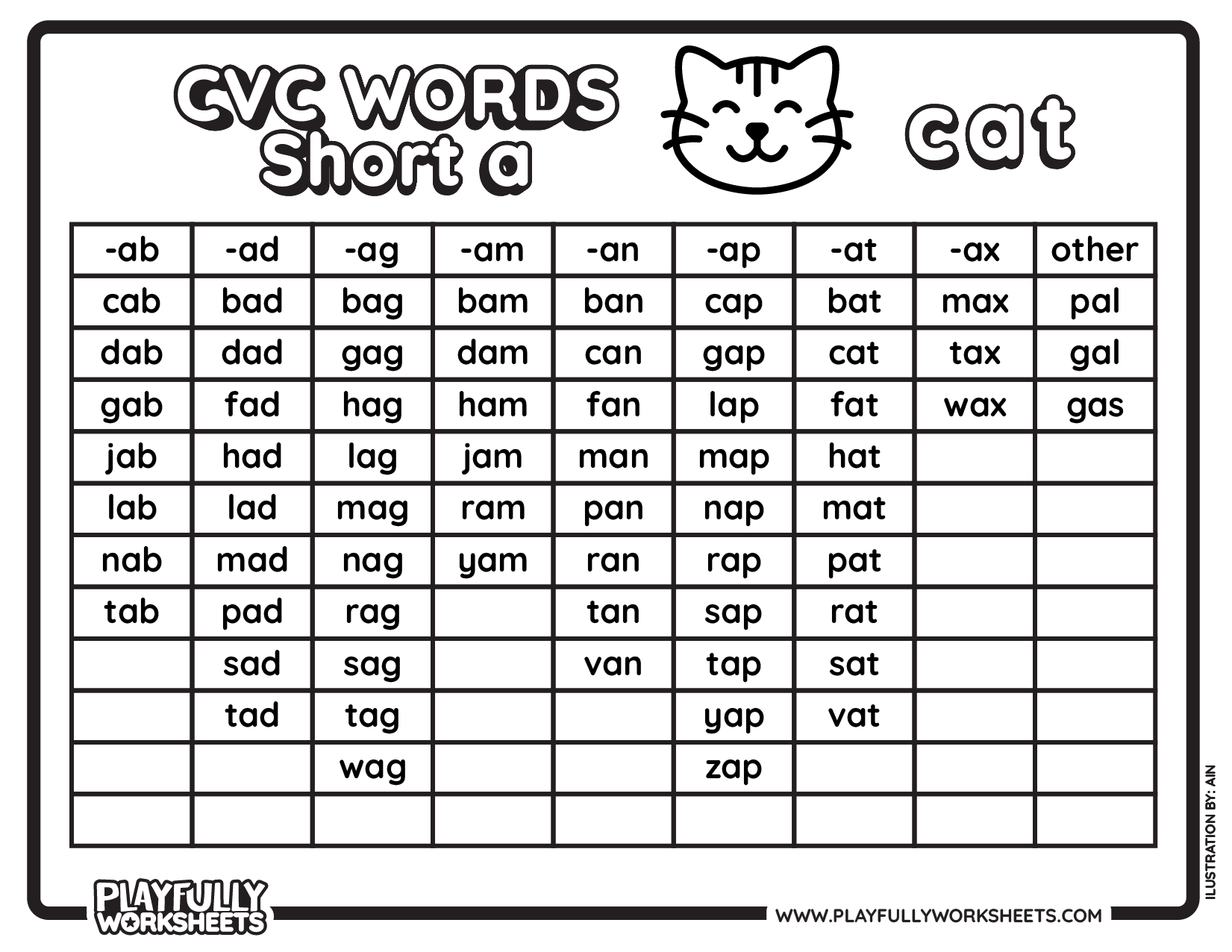
CVC Short A Word List
-ab: cab, dab, gab, jab, lab, nab, tab
-ad: bad, dad, fad, had, lad, mad, pad, sad, tad
-ag: bag, gag, hag, lag, mag, nag, rag, sag, tag, wag
-am: bam, dam, ham, jam, ram, yam
-an: ban, can, fan, man, pan, ran, tan, van
-ap: cap, gap, lap, map, nap, rap, sap, tap, yap, zap
-at: bat, cat, fat, hat, mat, pat, rat, sat, vat
-ax: max, tax, wax
other: pal, gal, gas
Color version
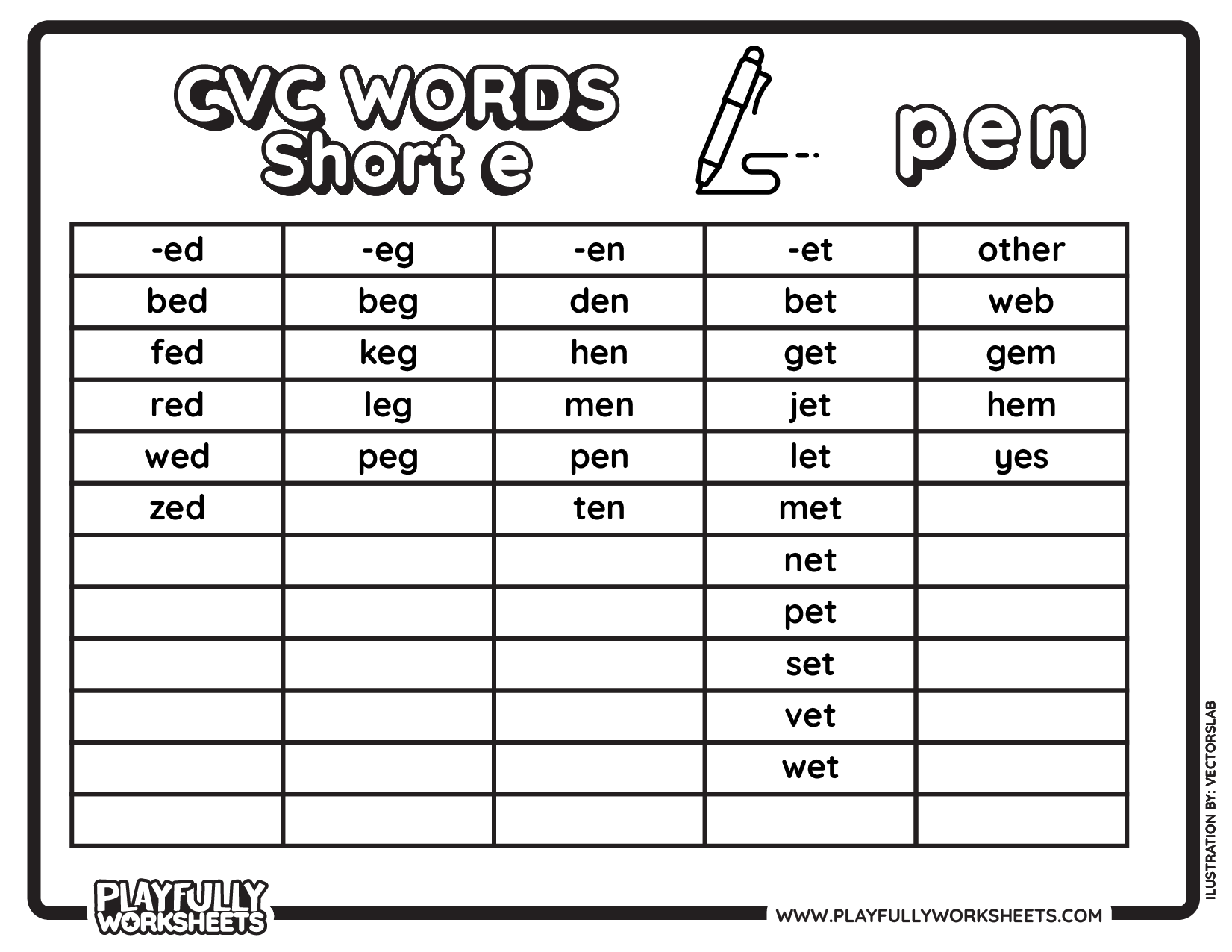
CVC Short E Word List
-ed: bed, fed, red, wed, zed
-eg: beg, keg, leg, peg
-en: den, hen, men, pen, ten
-et: bet, get, jet, let, met, net, pet, set, vet, wet
other: web, gem, hem, yes
Color Version
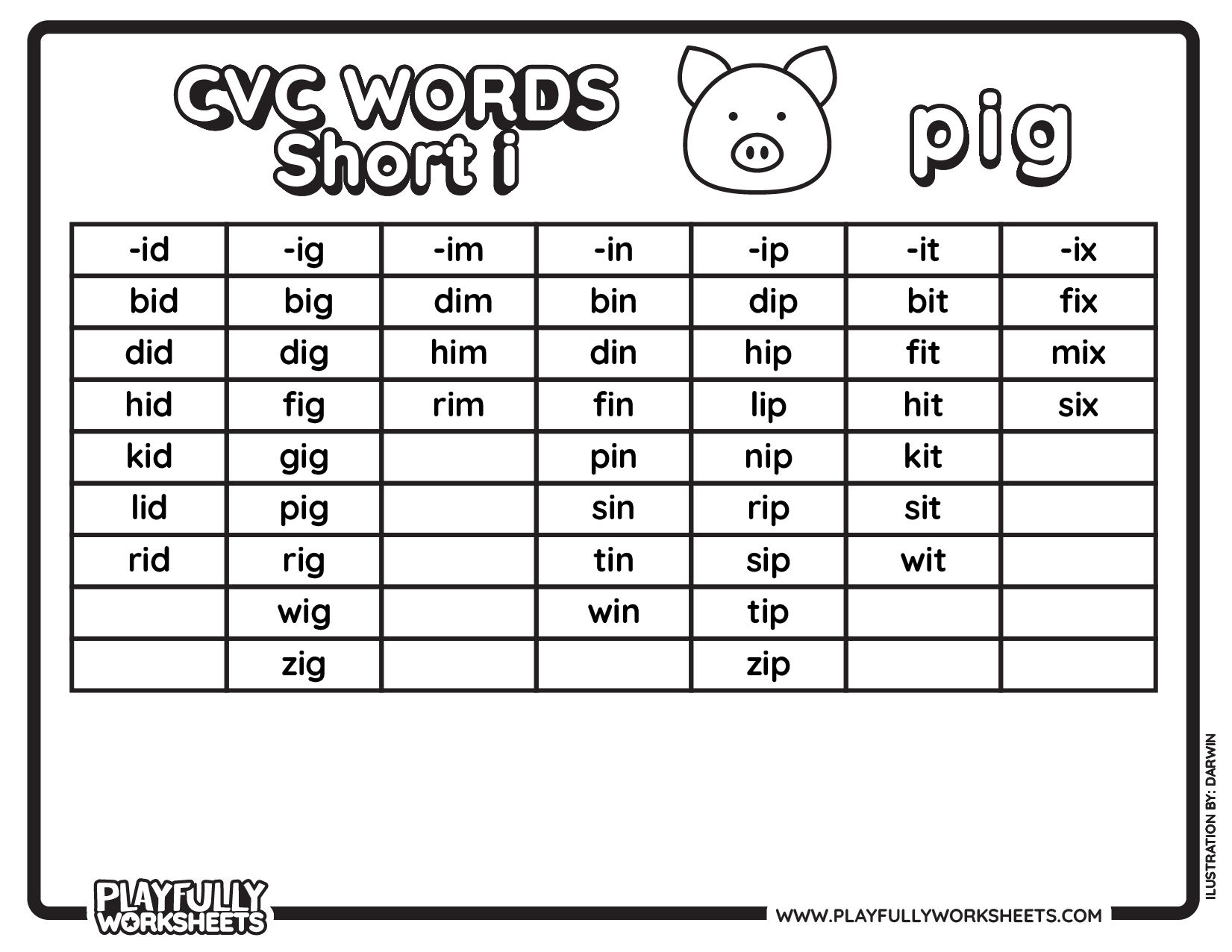
CVC Short I Word List
-id: bid, did, hid, kid, lid, rid
-ig: big, dig, fig, gig, pig, rig, wig, zig
-im: dim, him, rim
-in: bin, din, fin, pin, sin, tin, win
-ip: dip, hip, lip, nip, rip, sip
-it: tip, zip, bit, fit, hit, kit, sit, wit
-ix: fix, mix, six
Color Version
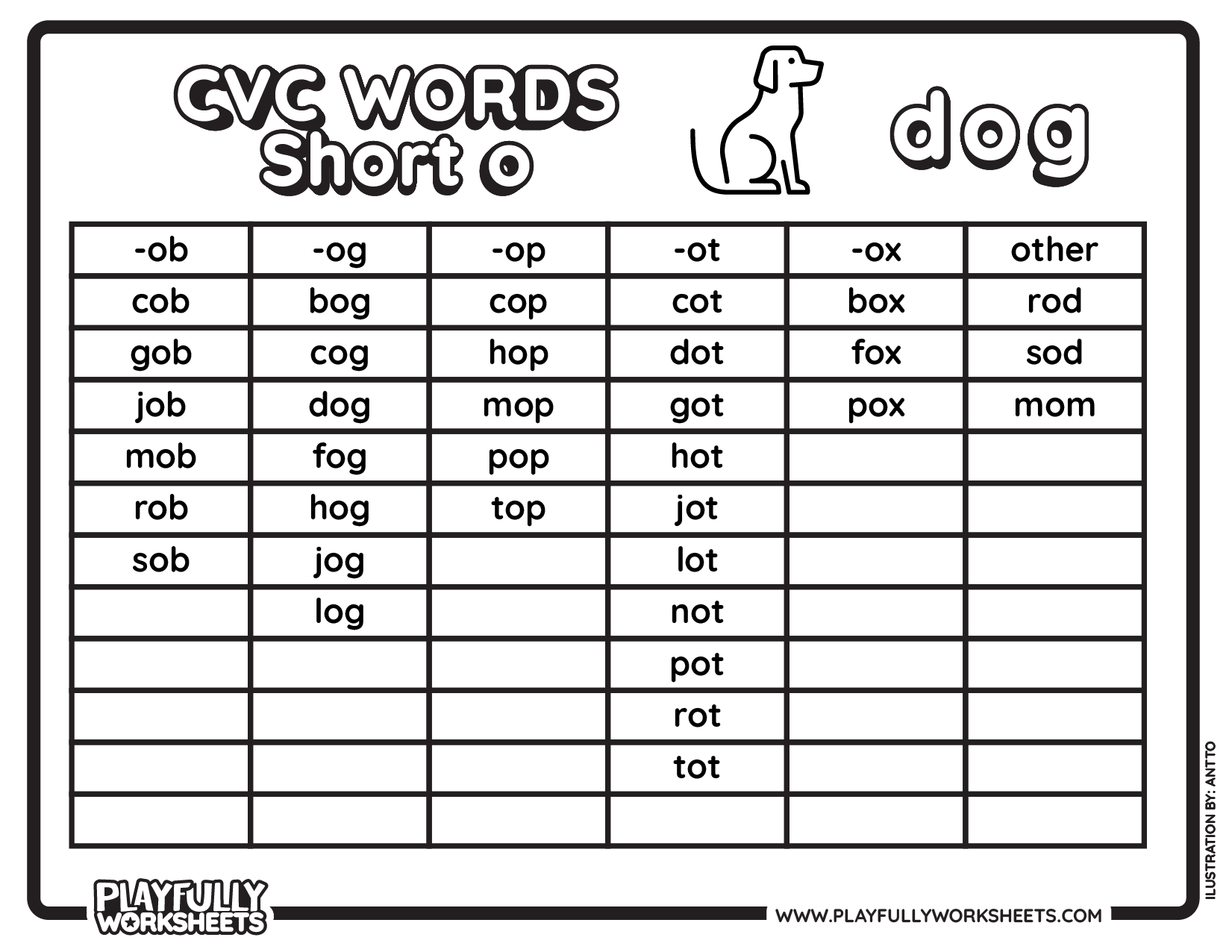
CVC Short O Word List
-ob: cob, gob, job, mob, rob, sob
-og: bog, cog, dog, fog, hog, jog, log
-op: cop, hop, mop, pop, top
-ot: cot, dot, got, hot, jot, lot, not, pot, rot, tot
-ox: box, fox, pox
other: rod, sod, mom
Color Version
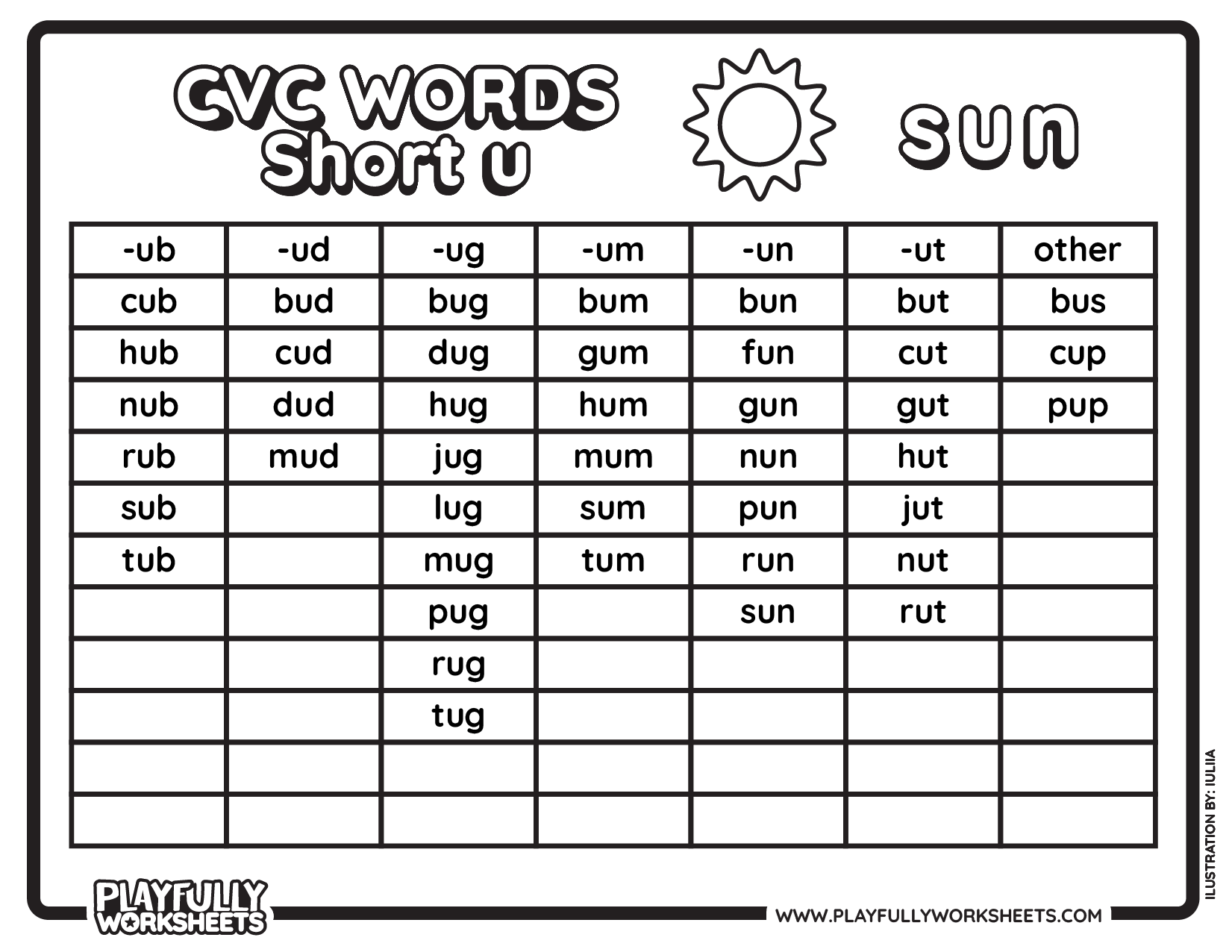
CVC Short U Word List
-ub: cub, hub, nub, rub, sub, tub
-ud: bud, cud, dud, mud
-ug: bug, dug, hug, jug, lug, mug, pug, rug, tug
-um: bum, gum, hum, mum, sum, tum
-un: bun, fun, gun, nun, pun, run, sun
-ut: but, cut, gut, hut, jut, nut, rut
other: bus, cup, pup
Color Version
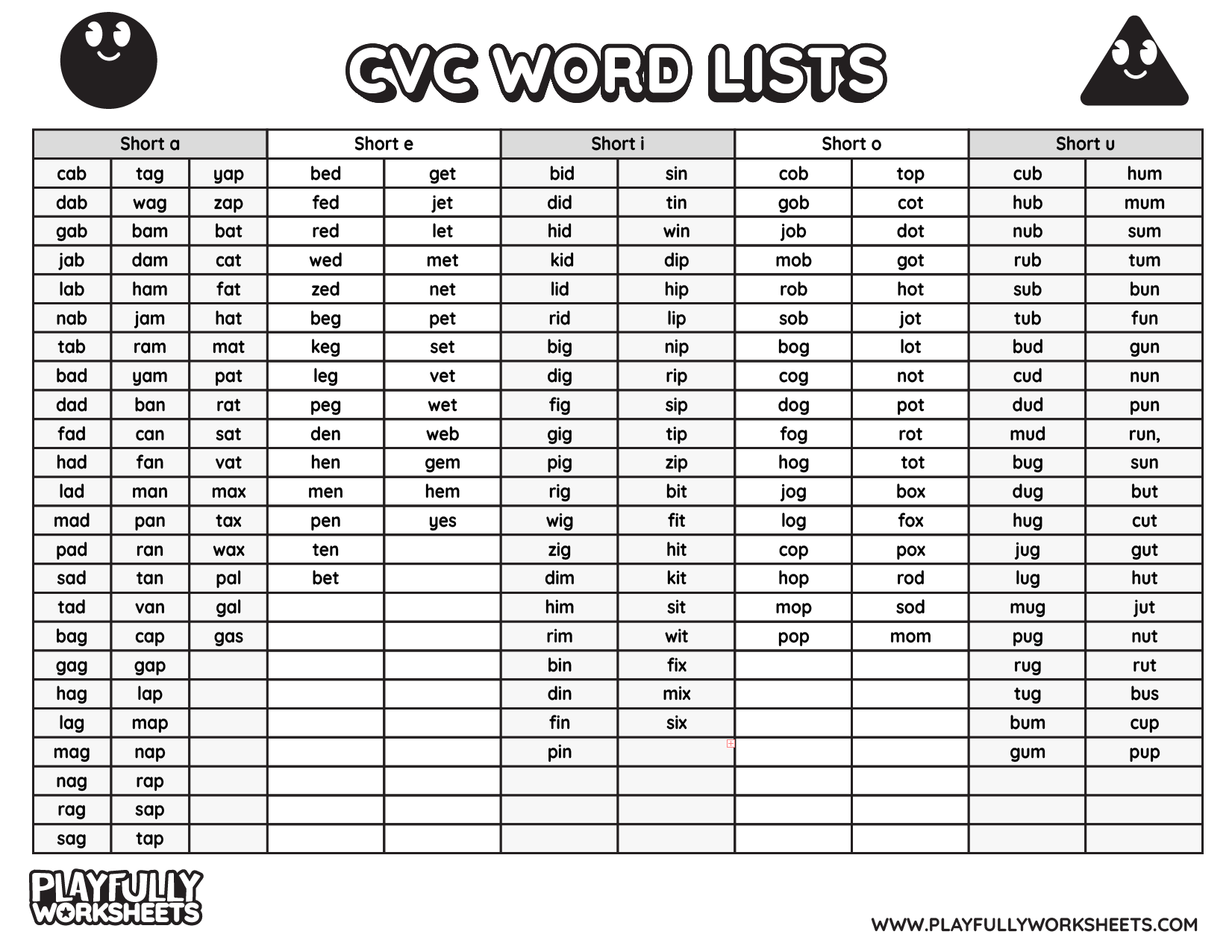
CVC Word List
Boost early reading skills with this complimentary CVC word list! This printable PDF is an invaluable resource for educators and parents, systematically organizing words by their medial vowel sounds. It’s designed to make learning to read straightforward and effective, whether you’re integrating it into an existing spelling curriculum or using it as a standalone reference for young learners.
Color Version