
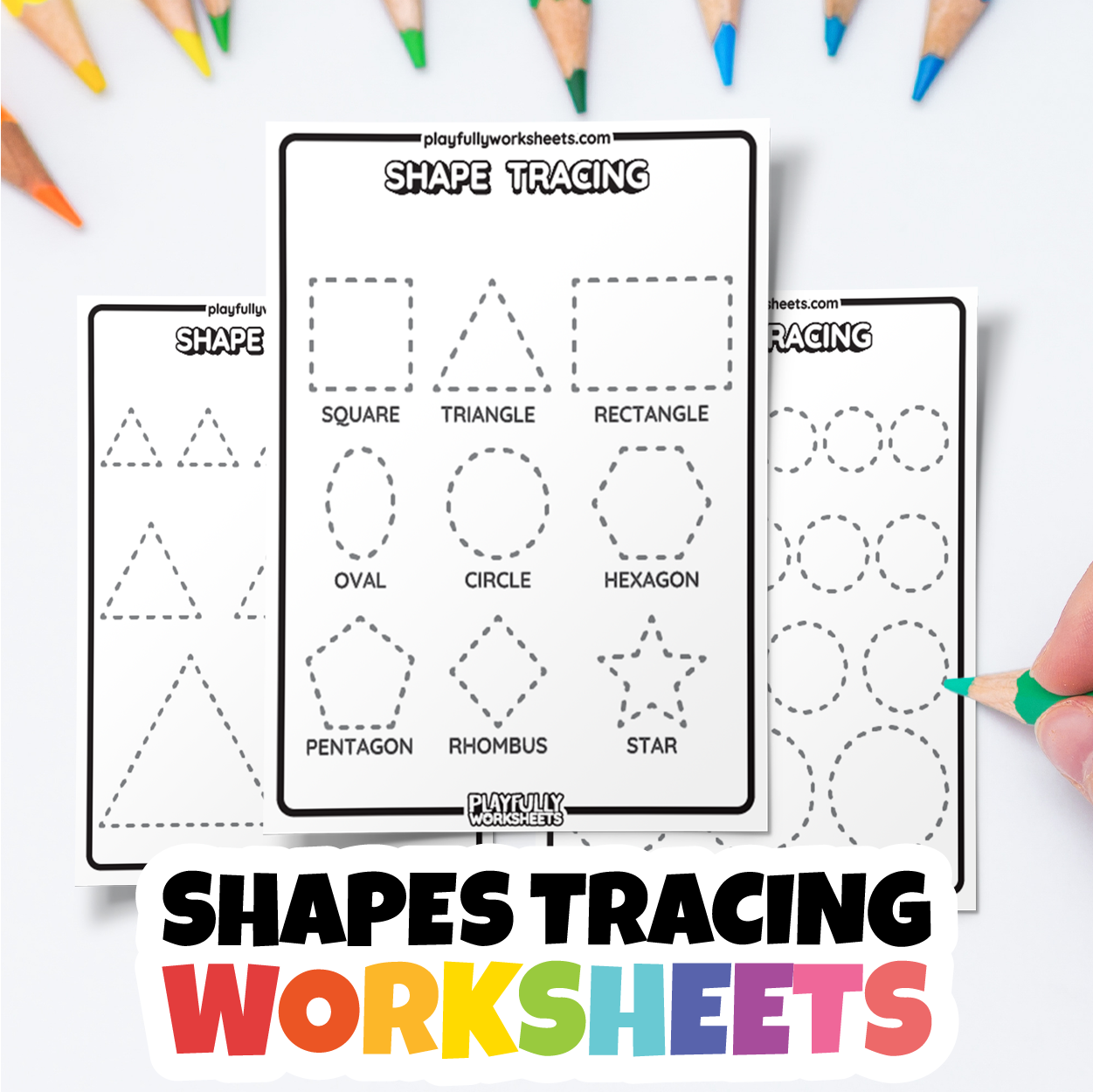
Learning to trace shapes is one of the most exciting steps in early education. It might look simple, but shape tracing worksheets play a powerful role in helping children build the coordination and confidence they’ll need for future writing tasks. Tracing shapes helps preschoolers develop hand-eye coordination, pencil control, and the fine motor skillsnecessary to write letters and numbers later on.
When children follow lines, curves, and corners, they are not only practicing drawing but also strengthening the connection between what they see and what their hands can do. This skill becomes the foundation for writing, drawing, and even problem-solving.
Why Shape Tracing Is an Essential Preschool Skill
In preschool, children are naturally curious and love to explore patterns and movement. Tracing shapes worksheetsguide that curiosity into structured practice while keeping learning fun. Tracing circles, squares, triangles, and other shapes teaches children to follow direction, build patience, and develop steady control of their hands.
Moreover, tracing helps children connect visual and physical experiences. As they trace a square or a star, they begin to recognize shapes in their environment—windows, books, toys, or even plates. This visual awareness is key to understanding the world around them. Through repetition, children build confidence and prepare themselves for writing letters, numbers, and words later on.
Benefits of Shape Tracing in Early Childhood Development
Shape tracing offers multiple developmental benefits that go far beyond just drawing lines. First, it strengthens fine motor skills, allowing children to hold pencils, crayons, or markers correctly and with more control. This is essential before they can begin writing letters or numbers.
Tracing also boosts concentration. Following the outline of a shape requires attention and precision—skills that are fundamental in every learning area. As children trace, they focus on staying within the lines, improving their ability to concentrate for longer periods.
Another key benefit is visual recognition. By tracing circles, squares, and triangles repeatedly, children start distinguishing differences between shapes, improving their ability to categorize and identify objects. Tracing also supports muscle memory, strengthening the small hand muscles that are vital for future writing.
Finally, shape tracing encourages visual memory and language development. When teachers and parents repeat words like “circle,” “square,” or “triangle” as the child traces, they reinforce English vocabulary naturally. Over time, children begin to connect the spoken word with its visual representation—a powerful start to bilingual learning.
Tips for Parents and Teachers
When introducing tracing, it’s important to create an environment of joy and encouragement. Start with large shapes and broad movements, allowing children to use their whole arm as they trace. As their confidence grows, gradually move to smaller, more detailed worksheets. For younger preschoolers, use thick crayons or washable markers. These tools are easier to hold and provide better control. Encourage daily practice but keep sessions short—just a few minutes each day can make a big difference without causing frustration.
While tracing, make it interactive and fun. Say the shape’s name aloud together: “Let’s trace a triangle!” or “Wow, that’s a perfect circle!” Combining repetition with enthusiasm helps children retain vocabulary while enjoying the activity. Most importantly, celebrate every little success. A simple “Great job!” or “That’s such a nice square!” builds motivation and confidence. Remember, tracing is not about perfection—it’s about progress and joy in learning.
Free Printable Resources for Practice
The best part of teaching shapes is having access to free printable tracing shapes worksheets that make practice easy and enjoyable. These resources allow children to explore different shapes at their own pace while improving their fine motor coordination. Parents can print them for home activities, and teachers can use them for group practice in the classroom. Our collection of shape tracing worksheets includes simple outlines, dotted shapes, and fun designs that keep kids motivated. Each worksheet provides opportunities to trace, color, and identify shapes while building essential pre-writing skills.
Shape tracing is much more than drawing lines—it’s a gateway to writing, observation, and bilingual learning. Through every traced circle and square, children strengthen the muscles, focus, and vocabulary that will support them throughout their educational journey. By combining play, repetition, and encouragement, tracing shapes worksheets become an essential part of early learning, helping children see the beauty in every curve and corner they draw. So grab some crayons, print your worksheets, and let’s make learning shapes an adventure filled with joy and creativity!
Download our free Shape Tracing Worksheets and start practicing today! You’ll see how quickly children gain confidence and control while having fun learning.
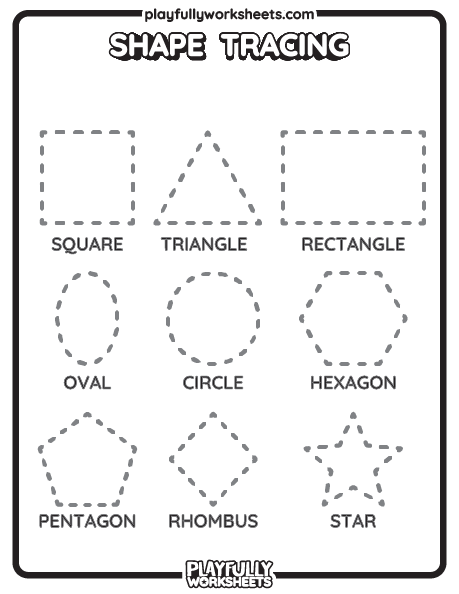
Begin your child’s geometric adventure with our general shapes tracing worksheet collection! This versatile shapes tracing sheet introduces a variety of forms, making it an excellent starting point for young learners. Consequently, consistent practice with these shapes tracing printable resources helps in early shape recognition and pre-writing skills.
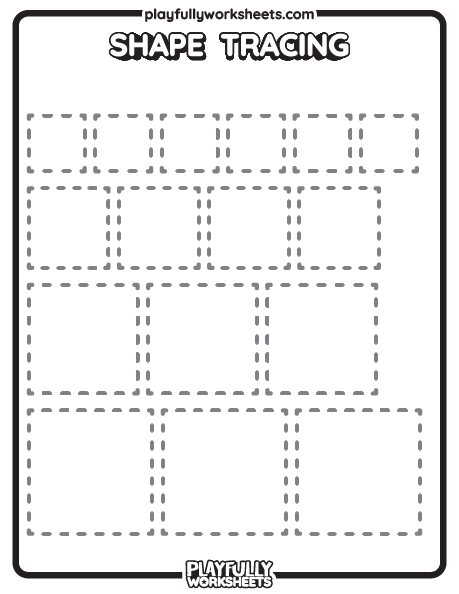
Help your child master the four equal sides with our dedicated Square Shape Tracing Worksheet! This specific shapes tracing sheet provides focused practice on the square, reinforcing its unique attributes. Furthermore, using this shapes tracing printable helps develop precision and spatial awareness.
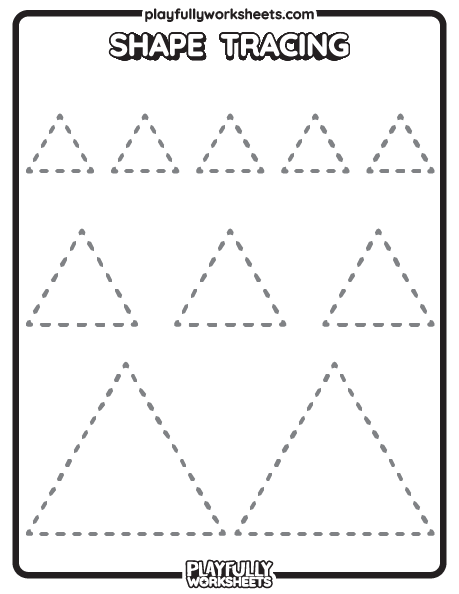
Introduce the versatile triangle with our engaging Triangle Shape Tracing Worksheet! This essential shapes tracing sheet allows children to practice forming three-sided figures, a fundamental skill in geometry. Moreover, repetitive use of this shapes tracing printable improves hand control and visual recognition.
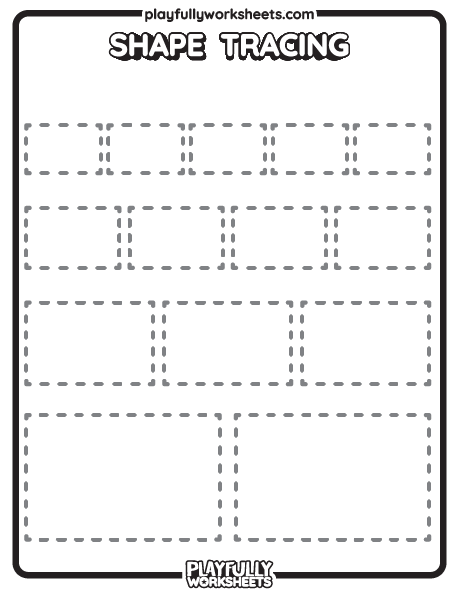
Extend their understanding with our Rectangle Shape Tracing Worksheet! This crucial shapes tracing sheet helps children differentiate between squares and rectangles, focusing on the distinct long and short sides. Consequently, this shapes tracing printable strengthens their ability to draw various quadrilaterals.
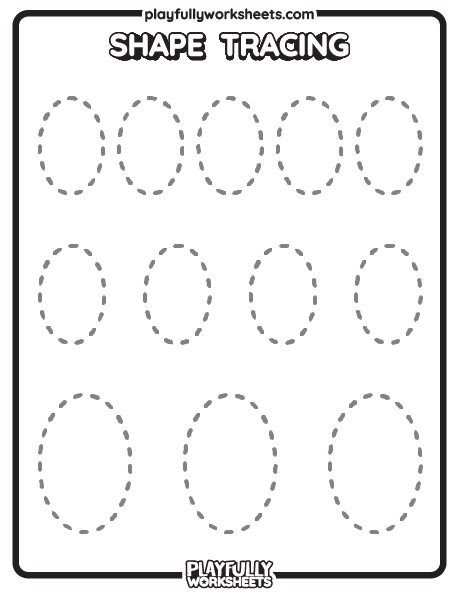
Explore smooth curves with our Oval Shape Tracing Worksheet! This captivating shapes tracing sheet is perfect for refining circular motions and understanding elongated forms. Furthermore, regular practice with this shapes tracing printable enhances dexterity and prepares them for more complex shapes
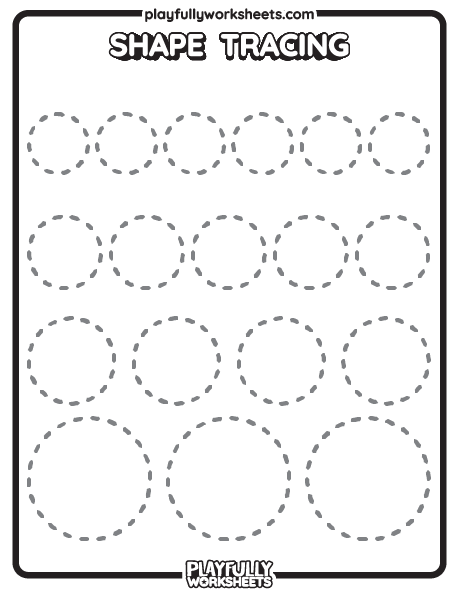
Master the perfect curve with our Circle Shape Tracing Worksheet! This fundamental shapes tracing sheet is vital for developing continuous line drawing skills. Therefore, consistent engagement with this shapes tracing printable lays a strong foundation for both writing and drawing.
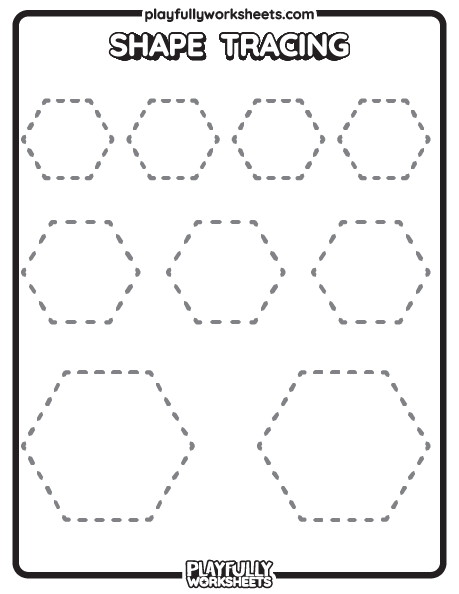
Challenge their skills with our Hexagon Shape Tracing Worksheet! This advanced shapes tracing sheet introduces a six-sided figure, encouraging more complex line control. Moreover, using this shapes tracing printable helps expand their geometric vocabulary and understanding.
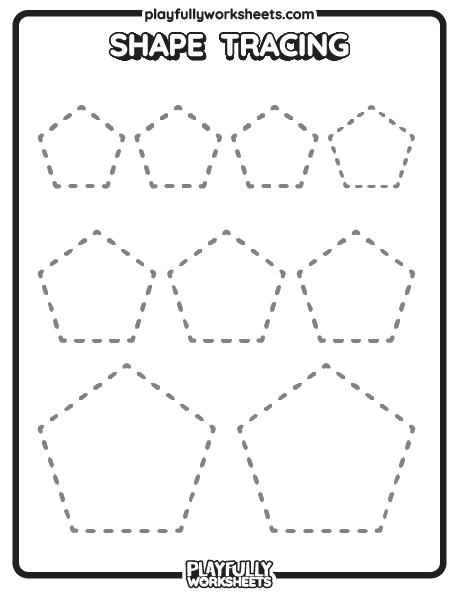
Discover the five-sided figure with our Pentagon Shape Tracing Worksheet! This unique shapes tracing sheet offers excellent practice for forming angular shapes accurately. Consequently, this shapes tracing printable is a great way to introduce them to more intricate polygons.
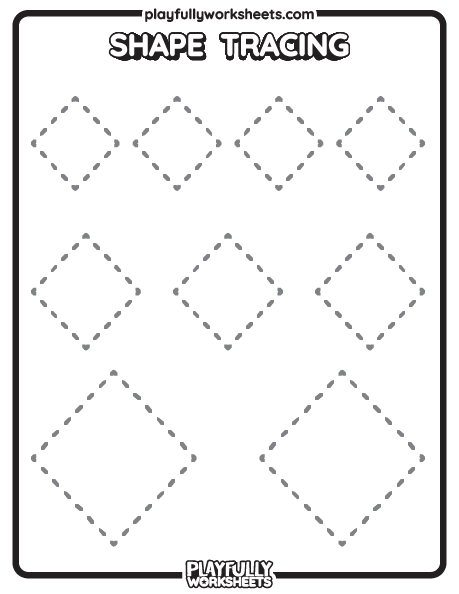
Uncover the diamond shape with our Rhombus Shape Tracing Worksheet! This intriguing shapes tracing sheet helps children understand slanted lines and symmetrical forms. Furthermore, regular use of this shapes tracing printableimproves precision and visual discrimination.
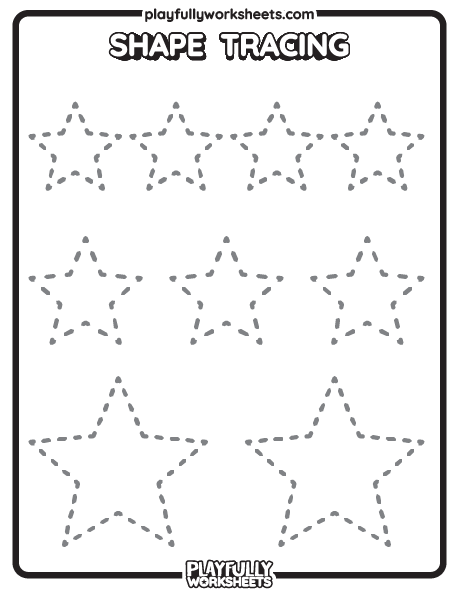
Spark their creativity with our delightful Star Shape Tracing Worksheet! This fun shapes tracing sheet combines multiple lines and angles, providing an exciting challenge. Therefore, using this shapes tracing printable is a wonderful way to boost confidence and fine motor skills in a playful manner.