
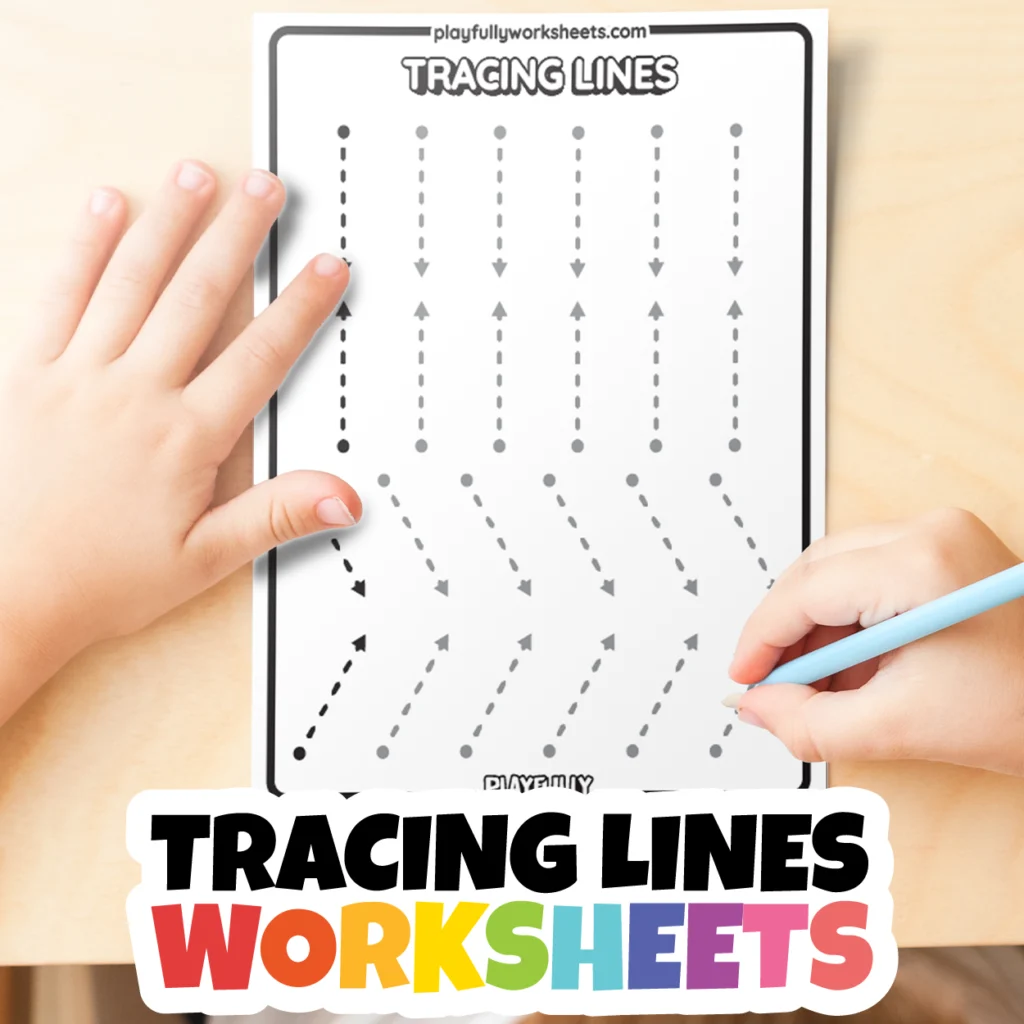
Tracing lines may look simple, but in early childhood education, it plays a powerful role in shaping how children learn to write, draw, and express themselves. Tracing lines worksheets are designed with dotted or guided paths that children follow using pencils, crayons, or markers. Through this activity, control, direction, and fine motor coordination are gently developed.
These early exercises are considered the foundation of handwriting. Before children can trace letters or numbers, they first need to master basic line movements—straight, curved, diagonal, or spiral.
When tracing becomes part of a child’s daily routine, not only does it support pre-writing skills, but it also builds confidence and patience—two essential traits for any kind of school education and special education setting.
Learning Stages Through Lines
The journey begins with simple vertical and horizontal lines that teach stability and direction. As children gain more control, diagonal and curved lines are introduced to improve coordination and precision. Eventually, zigzags, spirals, and loops are practiced to develop fluid movements that later form the basis of cursive writing and drawing shapes.
Each line type supports a unique developmental skill. Straight lines guide the child’s focus and hand control, while curved and spiral lines enhance flexibility and rhythmic motion. These early tracing experiences prepare children to move naturally from drawing lines to writing letters—making alphabet tracing worksheets or name tracing worksheets much easier to handle later on.
The Pedagogical Purpose Behind Tracing
In early education, tracing worksheets are used not only for fun but also as powerful tools that prepare the brain and body for writing. The act of following a path from point A to point B helps develop spatial perception, directionality, and visual tracking. Moreover, it encourages patience and attention to detail—two cognitive skills that support learning across all academic areas.
By practicing tracing lines, children learn how to organize their movements within a limited space. This awareness becomes essential when they begin using alphabet tracing worksheets or number tracing worksheets, where control and sequencing are required.
Practicing Tracing at Home
Parents can easily incorporate tracing activities into daily routines. A few minutes a day spent on tracing worksheets can make a big difference in muscle memory and control. Using varied materials such as crayons, markers, or even fingers on sand or flour keeps the activity engaging.
Turning the exercise into a game—like “help the train reach the station” or “guide the bee to the flower”—adds excitement and imagination. Instead of focusing on perfection, the goal should be enjoyment and effort. Celebrating small improvements motivates children and fosters a positive learning environment at home.
Tracing Strategies for Teachers
For teachers, tracing worksheets can be introduced as warm-up activities to prepare students for writing lessons. Singing along while tracing curves or zigzags adds rhythm and engagement. Observing each child’s pencil grip and posture helps identify areas that need gentle correction early on.
Grouping children by skill level ensures that each one practices at the right pace. Some may need extra time with straight lines before moving on to curves or spirals. By adapting instruction, teachers create inclusive and supportive classroom environments—a key goal in school education and special education.
Creative Tracing Activities
Tracing lines doesn’t have to be repetitive. Worksheets can feature imaginative paths such as guiding a plane through the sky or helping a fish swim along a river. After tracing, children can color or decorate their paths, turning learning into art.
This creative approach combines tracing worksheets with coloring pages, encouraging both focus and self-expression. When children decorate their traced lines, they reinforce what they’ve learned visually and emotionally—an ideal combination for early childhood education.
Through consistent tracing, fine motor skills become stronger, allowing children to control writing tools with ease. Hand-eye coordination improves as the eyes follow the line while the hand moves smoothly. Bilateral coordination—using both hands together—is also refined when one hand holds the paper steady and the other traces.
Tracing and Its Connection to Other Learning Areas
Tracing lines is not an isolated activity—it connects naturally to other early learning subjects. In pre-writing development, these line movements form the basis for letters and numbers. In math, they help children understand direction, pattern, and shape.
Whether used in alphabet tracing worksheets, name tracing worksheets, or number tracing worksheets, the principles remain the same: tracing develops the control and confidence children need to communicate through writing.
Learning should always feel joyful. Tracing can be made more exciting by allowing children to use bright markers, rainbow-colored lines, or textured pencils. Adding music or movement before sitting down to trace helps release energy and improves focus.
Supporting Better Results
Proper posture and lighting are important to ensure comfort and control while tracing. Children should sit upright with feet flat on the floor and elbows resting comfortably. Working on a firm surface prevents the paper from sliding and helps maintain steady movement.
Gradually increasing the complexity of worksheets—starting from basic lines and moving to curves and spirals—builds mastery step by step. This gradual repetition ensures long-term progress and confidence.
With regular practice, children gain the ability to shift direction easily and trace with rhythm and comfort—skills that will later transfer to writing letters, numbers, and even names with confidence.
Every traced line tells a story of growth, patience, and learning. These early tracing experiences do more than prepare children for writing—they cultivate creativity, persistence, and a love for learning.
Download our free tracing lines worksheets for preschool and watch how every line becomes a joyful step toward confident writing and discovery.
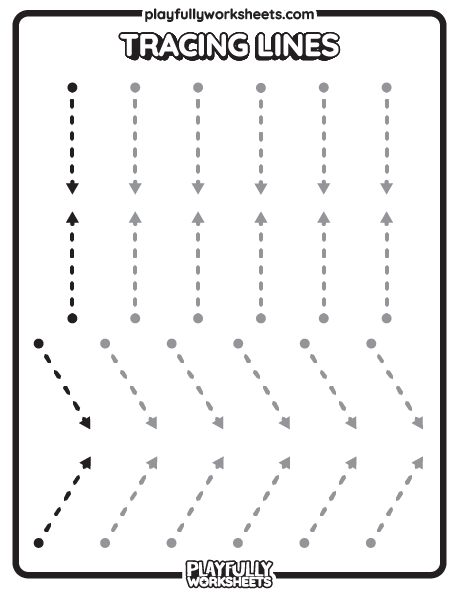
Vertical and Diagonal Tracing Line Worksheet
These tracing worksheets are perfect for developing fine motor control, guiding little hands along both straight and angled paths. Download these tracing lines worksheets free and watch their confidence grow!
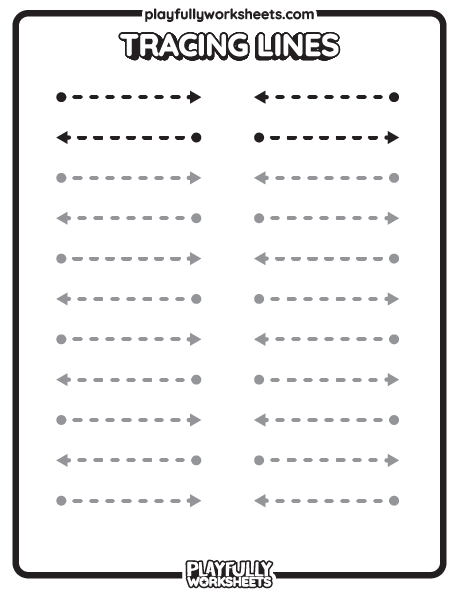
Horizontal Tracing Lines Worksheets
Foundational tracing worksheets are designed to help them practice left-to-right movements, crucial for reading and writing. Get these tracing lines worksheets free and start practicing today!
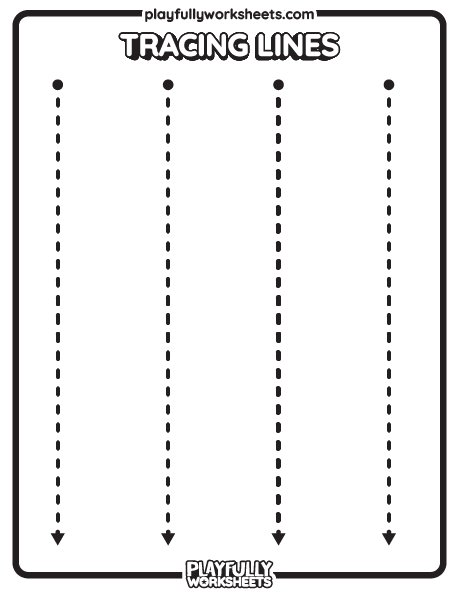
Vertical line tracing worksheet
This focused tracing worksheet helps children practice downward motions, an important step in letter formation. Access these tracing lines worksheets free to give your child a head start in handwriting.
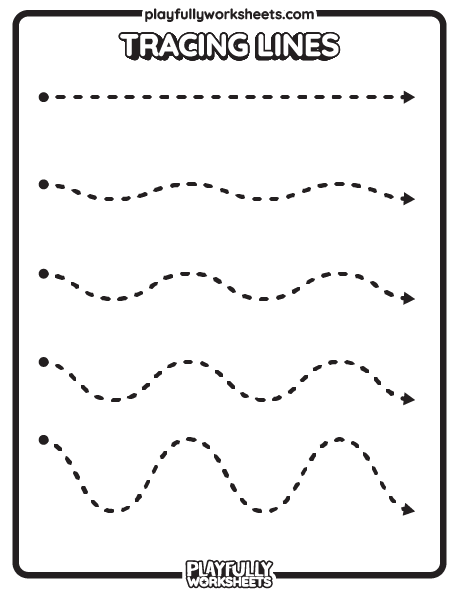
Random Wavy Tracing Lines Worksheets
Add a fun challenge to their motor skill development with our random wavy tracing lines worksheets. These playful tracing worksheets encourage flexibility and control as children follow unpredictable paths. Discover these tracing lines worksheets free and make practice exciting!
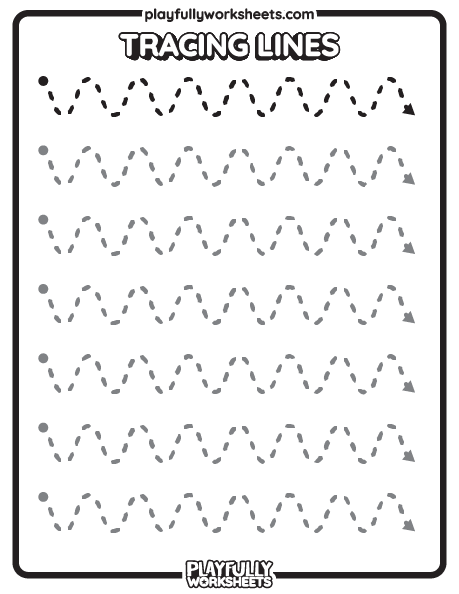
Wavy Tracing Lines Worksheets
Develop smooth and fluid hand movements with our wavy tracing lines worksheets. These engaging tracing worksheets are excellent for preparing children for cursive writing and improving overall penmanship. Download these tracing lines worksheets free and watch their skills flourish.
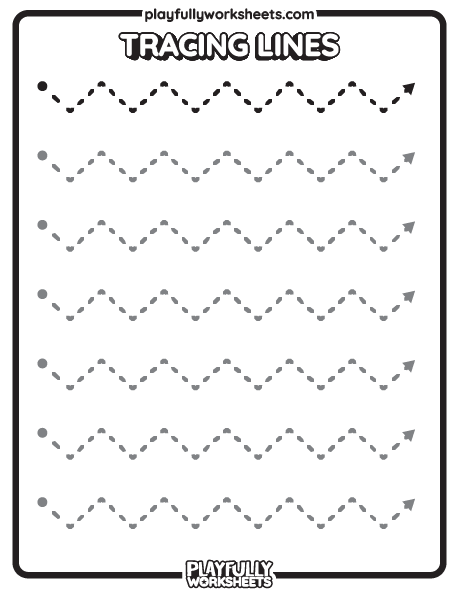
Zig-Zag Tracing Lines Worksheets
Boost precision and control with our exciting zig-zag tracing lines worksheets. These dynamic tracing worksheets challenge children to make sharp turns, enhancing their fine motor dexterity. Find these tracing lines worksheets free and bring a fun twist to their learning.
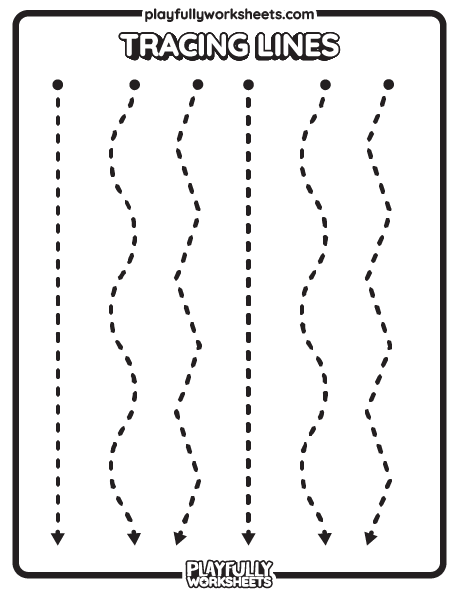
Long Vertical Tracing Line Worksheet
Extend their focus and control with our long vertical tracing line worksheet. This specialized tracing worksheet is designed to build endurance and consistency in their downward strokes. Get this tracing lines worksheet free to further refine their pre-writing abilities.
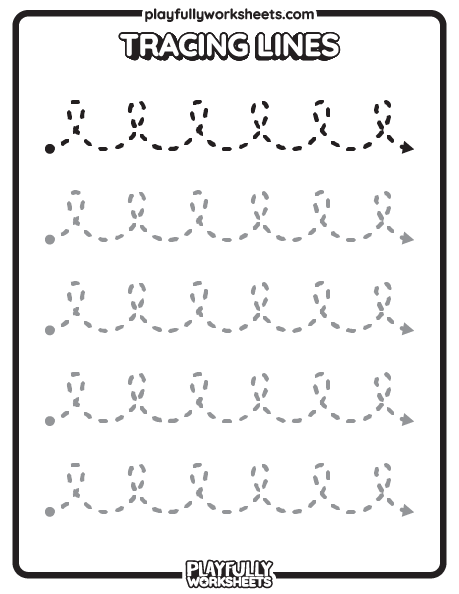
Coil / Spiral Tracing Line Worksheet
Unleash creativity and refine fine motor skills with our unique coil / spiral tracing line worksheet. This captivating tracing worksheet encourages continuous movement and controlled curves. Download these tracing lines worksheets free for an engaging and beneficial activity.
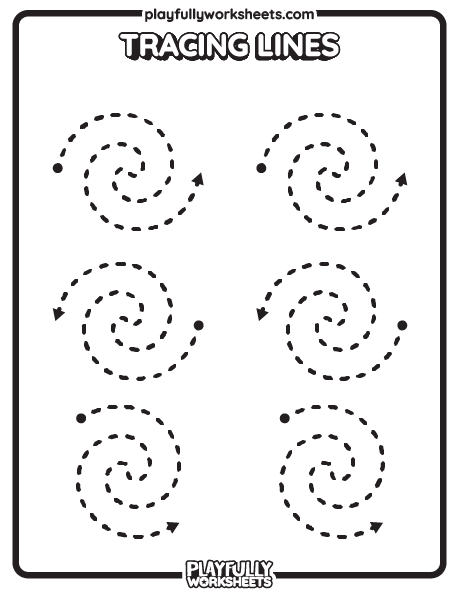
Spiral Tracing Line Worksheet
Engage young learners with our mesmerizing spiral tracing line worksheet. This particular tracing worksheet is excellent for developing consistent circular motions and improving hand control. Access these tracing lines worksheets free and watch their tracing skills take a spin!